














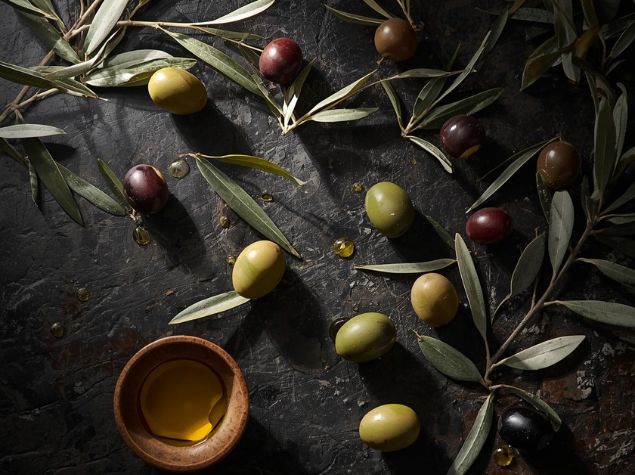
At kreta24.pl, we sell only extra virgin olive oil (EVOO). This is the highest quality grade—and it’s not just marketing. It is a precise legal category, the conditions of which are defined by Council Regulation (EC) No. 2568/91 and the standards of the International Olive Council (IOC). For olive oil to be labeled as extra virgin, it must meet both chemical and organoleptic criteria.
Chemical Criteria
| Free acidity ≤ 0.8% | Measures the degree of fat hydrolysis. The lower the value, the fresher and better processed the fruit. Good early harvest olive oil usually has a value below 0.3%. |
| Peroxide value ≤ 20 mEq O₂/kg | Measures primary oxidation. Good early-harvest olive oil usually has a value below 10. |
| K270 ≤ 0.22 and K232 ≤ 2.50 | UV absorbance — indicators of secondary oxidation and refining products. |
| ΔK ≤ 0.01 | Detects adulteration with refined oils. |
Organoleptic criterion — COI test panel
This is the criterion that distinguishes EVOO from all other categories. An accredited panel of 8–12 tasters evaluates the sample at a temperature of 28°C and must determine:
Median of defects = 0.0 — olive oil with no detectable sensory defect
Median fruitiness > 0.0 — the oil must be fruity — have the lively, fresh character of olive juice
Sensory defects that disqualify olive oil from the extra virgin category include: rancidity (fusty), mustiness (musty), rancidity (rancid), winey-vinegary notes, metallic notes, and others. Just one defect detected above the perception threshold is enough for the oil to be downgraded to a lower category.
What does this mean in practice?
Extra virgin is olive oil that is the juice of olives — in the literal sense. Produced exclusively by mechanical means (cold pressing, centrifugation), without heating above 27°C, without chemical processing, from healthy olives harvested at the right time. Any other production method — refining, chemical extraction, heating — results in a lower-grade oil, devoid of natural polyphenols, aromas, and squalene.
On the mass market, the vast majority of bottles labeled “extra virgin” have never passed an accredited panel test — and is sold based solely on the manufacturer’s self-declaration. At kreta24.pl, we sell only olive oils with documented provenance, from trusted producers.
When you pick up a bottle of high-quality Greek olive oil, the label often lists the variety. This is the first sign of quality—mass-produced oils rarely specify the variety, as they are blends from multiple sources, machine-harvested at various stages of ripeness. Koroneiki, Athinolia, Manaki, Lianolia—each offers a different world of aromas, a different biochemical profile, and a distinct character. Just as Burgundy wine differs from Bordeaux not only by region but primarily by grape variety, so too will Koroneiki olive oil be fundamentally different from Manaki olive oil—even if both come from the Peloponnese.
In this article, I introduce the olive varieties from which the oils available at kreta24.pl are pressed, supplemented with the most important varieties typical of the Greek olive oil tradition. I describe each one through the lens of a sommelier—sensory profile, polyphenol potential, origin, and best uses. I base my variety data on the official IOC World Olive Variety Catalog (International Olive Council, 2025) and materials from the Berlin EVOO Academy 2023/2024.
Each olive variety carries a unique set of genetically encoded enzymes, fatty acids, and phenolic compounds. The aroma and flavor of the oil begin in the fruit itself — even before it reaches the mill.
The key mechanism is the lipoxygenase (LOX) pathway: during pressing, the fruit’s enzymes react with phenolic compounds to form over 200 volatile compounds—these are responsible for why one olive oil smells like a green apple, another like artichoke, and yet another like ripe tomato or almond. The quantity and activity of these enzymes is a varietal trait—which is why Koroneiki and Coratina have a completely different aromatic profile than the mild Manaki or Kalamon.
Equally important is polyphenol potential — a variety’s ability to accumulate phenolic compounds, including oleocanthal (responsible for the peppery finish in the throat) and oleacein (the attribute of bitterness). These compounds determine the health-promoting properties of olive oil and its shelf life . The median levels of total polyphenols in Mediterranean olive oils range from about 200 to over 1,000 mg/kg—a more than fivefold difference, resulting mainly from the variety and the time of harvest.
The third—often overlooked—quality parameter is squalene, which I discuss in a separate section below.
Squalene — the forgotten hero of olive oil
Today, polyphenols are a symbol of premium quality in the world of olive oil. But there is another ingredient that is much less talked about, yet sets true extra virgin olive oil apart from all other vegetable oils: squalene.
Squalene (C₃₀H₅₀) is a polyunsaturated triterpene hydrocarbon belonging to the unsaponifiable fraction of olive oil. Its content in EVOO ranges from 1.5–10.1 mg/g of oilEVOO therefore remains the primary safe, plant-based source of squalene in the human diet.
Scientific studies have confirmed the following biological activities of squalene: antioxidant, anticancer, anti-inflammatory, cardioprotective, and anti-atherosclerotic effects. Additionally, squalene stabilizes olive oil when exposed to light and inhibits oxidation during frying. The pharmaceutical and cosmetics industries use it as a drug carrier, vaccine adjuvant, detoxifier, and skin protector.
Squalene, Varieties, and Harvest
A study by Hernández et al. (J. Agric. Food Chem. 2023) examined 36 varieties under identical conditions and showed that the variety’s genotype is the main source of squalene variability — the range between varieties reaches nearly 10- times. Squalene content decreases as the fruit ripens — similar to polyphenols, higher values are obtained with early harvesting.
Key conclusion: the same factors that maximize polyphenols (early harvest, appropriate variety, cold-pressed without refining) also maximize squalene. Refining drastically reduces squalene—which is why only unrefined EVOO retains its full content.
Squalene ranking of varieties from the Core-36 study (from highest):
🟢 Very high: Morrut (~11 mg/g), Picual, Klon-14
🟡 High: Koroneiki (medium-high)
🟠 Medium: Mastoidis/Tsounati, Leccino, Myrtolia
🔴 Low: Kalamon, Arbequina | Lowest: Dokkar (~1.3 mg/g)
Source: Hernández et al., J. Agric. Food Chem. 2023, Core-36 collection, CSIC Seville
About synonyms for varieties — an important note
Why does the same olive have different names?
Many Greek olive varieties have been cultivated in geographical isolation for centuries—in one valley it was known by one name, in a neighboring valley under another. It was only modern DNA analysis (SSR—microsatellite genetic markers) that made it possible to determine which of them are actually the same plant. The official IOC variety catalog is today the only reliable source of classification.
An example from this article: Tsounati, Athinolia, and Mastoidis are three names for the same variety—as confirmed by the IOC catalog. So if you see any of these names on an olive oil label, you are dealing with the same tree, though perhaps from a different region of Greece.
A similar situation applies to Koroneiki — also known as Psilolia, Ladolia, Lianolia, Vatiki, or Microcarpa, depending on the region.
Koroneiki is the undisputed queen of Greek olive cultivation. According to IOC data, it accounts for 50–60% of Greece’s total olive-growing area. It is cultivated practically everywhere: in Crete, the Peloponnese, Attica, Epirus, and Macedonia.
Synonyms: Psilolia, Ladolia, Lianolia, Vatiki, Microcarpa, Kritikia, Koroni.
Sensory profile: Intense greenness — olive leaf, artichoke, green apple, freshly cut grass, herbal notes. Distinct bitterness and a long peppery finish. Intensity: medium-robust when harvested early.
Polyphenols and squalene: High polyphenol potential. Z-3-hexenal content approx. 660–750 ppm at optimal ripeness. Squalene: high (according to Core-36) .
Agronomy (according to IOC): Oil-producing variety. High and consistent yields. Drought-resistant. Note: highly susceptible to olive cancer.
Uses: Salads, fish, grilled meat, roasted vegetables, soups. Excellent as a finishing touch for dishes requiring a bold flavor.
According to the official IOC variety catalog, the names Athinolia, Tsounati, and Mastoidis refer to the same olive variety — confirmed by SSR genetic analysis. In western Crete, it is called Tsounati; in Laconia (Monemvasia), Athinolia; Mastoidis is the scientific name.
One of the oldest Greek varieties — the IOC catalog notes trees in western Crete that are thousands of years old. The variety accounts for approx. 15–20% of the Greek olive-growing area.
Sensory profile: Intense, complex greenness — green olive leaf, freshly cut grass, green apple, artichokes, distinct herbal notes. Clean, intense bitterness and a very long peppery finish.
Polyphenols: Highest potential among Greek varieties. Exceptional oleocanthal and oleacein content.
Region: Western Crete (Chania, Rethymno) as Tsounati; Monemvasia, Lakonia as Athinolia. Harvest: October/November.
Uses: Perfect for cold dishes — salads, fish, seafood, cottage cheese, carpaccio.
<! -- LIANOLIA -->
LIANOLIA
Corfu and the Ionian Islands — a hidden polyphenol masterpiece
Analytical data (Olive Oil Times, Dafnis family, Corfu):
Oleocanthal: 680 mg/kg | Oleacein: 350 mg/kg | Total polyphenols: 1141 mg/kg
These are the highest results ever recorded in Greece — comparable to the record-breaking Italian Coratina varieties.
Sensory profile: Fresh green aromas, notes of artichoke and green leaves, light herbal accents. When harvested early—an intense, long peppery finish.
Region: Corfu, Lefkada, Epirus, northwestern Greece.
Olympia has been cultivated in Gortynia in the Peloponnese for over 1,500 years . Research by Greek universities shows that the polyphenol content—particularly oleocanthal—is 5–10 times higher than in other varieties harvested at the same time.
Sensory profile: Bitter radish, tomato leaf, freshly cut grass, apple, artichoke, herbs. Very long finish.
Region: Gortynia — central Peloponnese (Arcadia). Usage: For cold dishes only, as a finishing touch for premium dishes.
A symbol of Greek flavor — the king of table olives
Kalamon accounts for 24% of the area of table olive cultivation in Greece. Synonyms: Kalamata, Kalamatiani, Aetonychi, Chondrolia, Tsigkeli.
Sensory profile as EVOO: Ripe-fruity — ripe fruit, almond notes, figs, delicate sweetness. Low to medium bitterness, mild finish, characteristic creaminess. The IOC emphasizes that Kalamon oil is rich in polyphenols and of excellent quality.
Region: Messenia, Laconia, Ilia. Harvest: late. Uses: Risotto, pasta with seafood, soft cheeses, desserts.
MANAKI
Mild elegance from the Peloponnese
Sensory profile: Delicate fruitiness — ripe fruit, almond notes, light floral notes, ripe apple. Mild bitterness, subtle finish. Intensity: delicate. Perfect for those just discovering quality EVOO.
Region: Peloponnese. Uses: Fruit salads, delicate fish, poultry, desserts, focaccia.
The Macedonian giant — the dominant table variety of the north
According to the IOC, it accounts for 27% of the table olive cultivation area in Greece. Very large fruit, loose pit. Early harvest — up to green table olives.
EVOO profile: Mild, ripe-fruity — ripe apple, nutty notes, creaminess. Low bitterness. Region: Chalkidiki, Central Macedonia.
AMFISSIS (Konservolia)
Fokida — the former dominant table olive variety of central Greece
It once covered 70% of Greece’s table olive acreage — today about 30%. Synonyms: Konservolia, Voliotiki, Agriniou, Artas, and others.
EVOO profile: Medium fruity — notes of grass, herbs, banana, forest fruits, and almond. Mild bitterness. Region: Phocis (near Delphi), Fthiotida, Euboea, Boeotia.
BOTSIKOLIA and AGRIELIA (wild olive)
Premium niche varieties — extreme polyphenol potential
Agrielia is a wild form of the European olive tree (Olea europaea var. sylvestris). Both are fascinating for one reason: extremely high polyphenol content.
Oleocanthal: 2040 mg/kg | Oleacein: 901 mg/kg | D1: 2941 mg/kg | Total: 3443 mg/kg
Class: Medicinal Grade. WOCH certificate, Prof. Magiatis, Athens, October 2, 2025.
Profile: Intense bitterness, very long peppery finish, exceptionally high oleocanthal content.
LECCINO
Sensory profile: Fresh green aromas, artichokes, olive leaf, light fruity notes. Moderate bitterness, medium finish. Pleasant harmony. Polyphenols: approx. 562 mg/kg median (data from Servili, 2024).
Region: Italy (Umbria, Tuscany, Puglia), increasingly Greece. Uses: Salads, fish, poultry, pasta. A good premium olive oil for everyday use.
CORATINA
An Italian variety—the benchmark for the highest polyphenol potential
In studies by Prof. Servili (Università di Perugia, 2024), it achieves a median polyphenol content of approx. 1008 mg/kg — the highest among all European varieties tested.
Profile: Extremely intense — powerful bitterness, very long peppery finish. Region: Puglia (Bari, Brindisi). Harvest: January/February.
Thrace — a variety from the northernmost growing region
A variety from the Alexandroupoli and Xanthi areas. Thrace’s cooler climate slows ripening and promotes polyphenol accumulation. Profile: Green aromas, clean fruitiness, moderate bitterness.
Olive oil is practically 100% fat. 1 g of fat provides 9 kcal — which means that 100 g of olive oil is approx. 884 kcal. One tablespoon (10 ml, approx. 9 g) is approx. 88–90 kcal, and a teaspoon (5 ml) is about 44–45 kcal. Olive oil contains no carbohydrates or protein.
Important: in terms of calorie content, all olive oils are identical — cheap supermarket olive oil and medicinal-grade olive oil have exactly the same number of calories. The difference lies solely in the content of bioactive polyphenols, squalene, and aromas — which are practically nonexistent in cheap olive oils.
How much olive oil would you have to drink to achieve the same effect?
To illustrate this, let’s take Sparta Medicinal (Agrielia, Total 3443 mg/kg) as an example. One tablespoon (10 ml, approx. 9 g) provides:
Sparta Medicinal — 1 tablespoon (10 ml, ~9 g):
Polyphenols: ~31 mg | D1 (oleocanthal+oleacein): ~26 mg | Calories: ~88 kcal
To achieve the same level of polyphenols from supermarket olive oil (100 mg/kg):
Calculation: Sparta Medicinal 3443 mg/kg ÷ standard 100 mg/kg = 34.4×. 9 g × 34.4 = approx. 310 g of supermarket olive oil = 2740 kcal.
The conclusion is simple: premium olive oil with a high polyphenol content allows you to achieve health benefits with a minimal dose—one tablespoon a day. Supermarket olive oil will never achieve this effect—regardless of the amount.
Where exactly do the polyphenols in olive oil come from? The role of the mill
This is one of the most overlooked facts in consumer education. Polyphenols do not “exist” in finished olive oil on their own — they must be activated and transferred from a water-soluble form to a fat-soluble form during the pressing process.
In the olive fruit, polyphenols—including oleuropein and its derivatives—are bound to plant water. Only the appropriate crushing mechanism (crusher) and controlled malaxation conditions trigger the enzymatic reactions of the lipoxygenase pathway, which convert these compounds into oil-soluble phenolic aglycones: oleocanthal, oleacein, and hydroxytyrosol. Without the right crusher and a controlled process, these compounds simply won’t be present in the oil.
Why can’t a rural mill produce high-quality oil?
Traditional rural mills—often outdated and not thoroughly cleaned between batches—are the source of many quality issues: olives wait for pressing for many hours or days (anaerobic fermentation → rancidity) , uncleaned metal surfaces introduce metallic defects, and the lack of temperature control and oxygen exposure leads to the oxidation of polyphenols even before they are activated.
That is why at kreta24.pl we pay attention not only to the variety and harvest date, but also to mill technology—modern crushers (hammer, blade, or fork crusher), controlled malaxation in a closed system without oxygen access, and a short time from harvest to the press (max a few hours). It is these three elements together—variety, harvest date, and technology—that determine what actually ends up in the bottle.
Sensory profile and variety are one thing—but how can quality be measured objectively? The answer is NMR (Nuclear Magnetic Resonance) performed by the World Olive Center for Health in Athens under the supervision of Prof. Prokopios Magiatis of the University of Athens. It is the only method approved by the Greek Food Safety Authority (EFET) that simultaneously and precisely identifies all key phenolic compounds in olive oil.
The certificate result includes two key indicators:
- Total polyphenols (Total) — total content of all identified phenols in mg/kg. A general indicator of antioxidant activity and quality.
- Index D1 = Oleocanthal + Oleacein — the sum of the two most important secoiridoids. Oleocanthal has anti-inflammatory effects similar to ibuprofen; oleacein is a powerful antioxidant with cardioprotective effects.
250–500 mg/kgStandard — antioxidant activity, 60–80 percentile500–1000 mg/kgVery High Phenolic — strong anti-inflammatory activity, 85–95 percentile1000–2000 mg/kgUltra High Phenolic — very high health-promoting activity, 96–99 percentile2000–2900 mg/kgUltra+ High Phenolic Elite — clinical level, >99th percentile>2900 mg/kgMedicinal Grade — extreme, only a few oils in the world
Health claim EU 432/2012
Oils containing more than 5 mg of hydroxytyrosol and its derivatives per 20 g of oil are eligible for the health claim: “protects blood lipids from oxidative stress”. The WOCH certificate explicitly states this value.
How many polyphenols does the average supermarket olive oil contain?
Before we show the results from kreta24.pl, it’s worth understanding the point of reference—that is, what most consumers actually buy. The difference may be shocking.
| Olive oil category | Typical polyphenol content | Actual D1 value |
|---|---|---|
| Standard supermarket EVOO | 50–150 mg/kg | often <50 mg/kg or not specified |
| Premium EVOO (delicatessens, health food stores) | 200 –400 mg/kg | 100–200 mg/kg |
| EU Health Claim Threshold 432/2012 | ≥ 250 mg/kg | — |
| High Phenolic EVOO | 500–1000 mg/kg | 300–700 mg/kg |
| Ultra High Phenolic EVOO | 1000–2900 mg/kg | 700–2000 mg/kg |
| Medicinal Grade | > 2900 mg/kg | > 2500 mg/kg |
Sources: highphenolic.com (2026); terracenturia.com (2026); EU Regulation 432/2012; industry data
In other words: standard supermarket olive oil contains 50–150 mg/kg of polyphenols — meaning it can be as much as 20 –50 times lower in bioactive compounds than medicinal-grade olive oil. What’s more, most of these oils lack any analytical certificate — the “extra virgin” label is merely a self-declaration by the producer, unverified by an accredited laboratory.
Sparta Medicinal Agrielia (September 2025): Total 3443 mg/kg, D1 2941 — Medicinal Grade, 68.85 mg/20g → over 13× the EU threshold
This range—from 786 to 3,443 mg/kg—is a difference of nearly 4.5 times within the same EVOO category. And that is precisely why the mere label " Extra Virgin" on the label says little about the actual quality of the oil you’re holding in your hand.
Polyphenol and squalene potential of varieties
★★★★★ ~1008 mg/kgVery intense Robust
| Variety | Polyphenols | Squalene | Sensory profile | Intensity |
|---|---|---|---|---|
| Coratina | — | Extremely intense | Robust | |
| Lianolia (Corfu) | ★★★ ★★ up to 1141 mg/kg* | — | Intense, green | Robust |
| Agrielia (wild) | ★★★★★ extreme | — | Very intense | Robust |
| Athinolia/Tsounati | ★★★★ ★ highest grade | ★★★ average | Intense, complex | Robust |
| Olympia/Choraitiki | ★★★★★ 5–10×** | — | ||
| Koroneiki | ★★★★ high | ★★★★ high | Intense, green | Medium-Robust |
| Botsikolia | ★★★★ high | — | Intense | Medium-Robust |
| Leccino | ★★★ ~562 mg/kg | ★★★ medium | Fresh, green | Medium |
| Manaki | ★★ moderate | — | Mild, fruity | Delicate |
| Kalamon | ★★ moderate-good | ★★ low | Ripe-fruity, creamy | Delicate |
| Amfissis | ★★ moderate | — | Mild, herbal | Delicate |
| Chalkidikis | ★ low-medium | — | Mild, creamy | Delicate |
*with early harvest and precision technology (data: Dafnis family, Corfu; Olive Oil Times) | **compared to other varieties at the same harvest time (research by Greek universities) | Squalene data: Hernández et al. J. Agric. Food Chem. 2023, Core- 36
Before you buy — which olive oil is right for you?
There is one mistake that most buyers make: they look for “the best olive oil” instead of “the best olive oil for me”. And these are two completely different questions. Sparta Medicinal, with 2040 mg/kg of oleocanthal, is the absolute pinnacle of olive oil biotechnology—but it’s not the right choice for someone who wants to drizzle it on toast for breakfast and can’t tolerate intense bitterness.
To choose wisely, you must first ask yourself one simple question: what do I need this olive oil for?
🏡 Olive oil from a local farm
You know where it comes from, you’ve been to Crete, the Peloponnese, Lesbos—and you have a fondness and trust for it. Maybe it hasn’t passed an accredited panel test, maybe it has slight sensory defects (classic virgin or lower grades), but it’s authentic, homemade, real. We fully respect that—this is exactly how olive oil production has worked for thousands of years.
Category: virgin or unclassified olive oil, local, sentimental. Don’t look for certificates—look for memories.
🍳 Extra virgin for cooking — mild, everyday
Most consumers in Poland do not tolerate intense bitterness and a peppery finish — and that is absolutely normal. There is no obligation to like extremes. A good cooking oil should be mild, balanced, with a subtle — the ripe-fruity class, varieties such as Manaki, Kalamon, or the mild Koroneiki from a later harvest. You can find the culinary EVOO category on kreta24.pl in the filters under intensity: Delicate or Medium.
Category: Culinary EVOO, mild bitterness and pungency ≤ 3. Perfect for frying, baking, and dressings for the whole family.
🌿 Gourmet — complex, multi-aromatic, for connoisseurs
You want to taste the difference. You’re interested in the sensory profile, aromatic complexity, and the harmony between bitterness, spiciness, and fruitiness. You’re looking for an olive oil that can be discussed just like wine — with descriptors, terroir, and varietal character. This is where early harvest Koroneiki, Athinolia, Lianolia from Corfu, and Olympia/Choraitiki come in—olives harvested in the early stages of ripeness, pressed the same day, with quality certifications and awards from Berlin GOOA, NYIOOC, and London IOOC.
Category: Premium EVOO, Medium-Robust intensity, complex sensory profile, competition awards. Use cold as a finishing touch for dishes.
💚 High Phenolic — olive oil that truly benefits your health
Here we’re shifting gears—from culinary to health-promoting. Olive oils with an NMR certification above 500 mg/kg are products with documented benefits: oleocanthal inhibits the same inflammatory pathways as ibuprofen, oleacein protects the cardiovascular system, hydroxytyrosol activates longevity pathways. They will be intensely bitter and have a peppery, throat-tingling sensation
Category: High Phenolic EVOO, Total NMR 500–2900 mg/kg, WOCH certificate. Filter on kreta24.pl: “Total Polyphenols according to WOCH” and “Bioactivity D1”.
⚕️ Medicinal Grade — clinical product
Sparta Medicinal (Agrielia, Suma 3443 mg/kg, D1 2941 mg/kg) is not the kind of olive oil you drizzle on a salad. It is a product straddling the line between functional food and a nutraceutical — used by doctors and clinical dietitians as a supplement to anti-inflammatory, oncological, and cardiological therapies. The price is correspondingly high. But the math is simple: for this price, you get a concentration of bioactive phenolic compounds that you won’t find in any other olive oil, even if you drank it by the liter.
Taste? Intense bitterness, a very long, distinct peppery finish—every spoonful is a distinct, physical sensation in the throat. Surprising for many people upon first tasting. For those who understand what lies behind it—desirable.
Category: Medicinal Grade, Total NMR >2900 mg/kg, D1 >2500 mg/kg. Filter on kreta24.pl: “Medicinal Grade / Clinical use”.
You can find all these categories at kreta24.pl. Every olive oil with an EU 432/2012 health claim comes with full results of biochemical analysis and advanced NMR analysis — Total polyphenols, D1 index, oleocanthal, oleacein, aglycone fractions. You can sort and filter by these parameters directly in the store — by total polyphenols, D1 level, region, variety, organic certification, and many other criteria. No one should buy olive oil blindly.
“My olive oil is the best because it’s mine”—or about regions, myths, and a certain test
Crete. The Peloponnese. Lesbos. Zakynthos. Corfu. Every region has its die-hard fans, every region has its legends, and every region has its producers who look you straight in the eye with absolute conviction and say: “our olive oil is the best in the world”.
And you know what? They’re right. Every single one of them. All the regions at once. Because it’s a bit like asking whether wine from Bordeaux or Burgundy is better—the answer depends on the specific producer, vintage, grape variety, and winemaking techniques, not on the vineyard’s ZIP code.
🧪 A quick field test for advanced learners
The next time you meet an olive oil producer or seller, ask them one simple question:
“Why is your olive oil the best?"
If the answer goes something like this:
“Because it comes from Crete / the Peloponnese / from my grandfather / because it’s been a family tradition for generations / because it’s the best soil in the world”
— you can rest easy. The producer is sincere. They love their olive oil. And most likely they don’t have a clue about what actually determines its quality. 🫒
Meanwhile, a producer who really knows what they’re doing will respond differently. They’ll tell you about the harvest date and ripeness index, about the time between harvest and pressing (measured in hours, not days), the type of crusher and the malaxation temperature, and the closed system with no oxygen access. And finally, they’ll pull out an NMR certificate with specific numbers—oleocanthal, oleacein, total polyphenols—and say: “Here’s the proof, not just words”.
Crete has potential. The Peloponnese has potential. Lesbos, Corfu, Zakynthos—each of these regions can produce outstanding olive oil. And each of these regions regularly produces completely average olive oils. A region is a starting point, not a quality label. Outstanding olive oil is always the result of the work of a specific person with specific knowledge and specific equipment—not a geographical lottery.
🫒 Pro tip: check your olive oil — taste it like a sommelier
Do you have a bottle of olive oil at home? Instead of just pouring it on your salad—take 3 minutes and check what you’re actually holding in your hand. It’s easier than you think.
You smell — a dark blue vessel heated to 28°C, covered with a glass lid. Remove the cover and smell slowly. What do you smell? Use the IOC’s chart of 23 positive aroma descriptors—this is the official list of aromas that extra virgin olive oil may exhibit:
You rate the intensity on the IOC scale of 0–10. The closer the glass is to your nose and mouth, the higher the score:

Take a sip — about 3 ml, and spread it throughout your mouth all the way to the back of your throat. Where does the bitterness appear? How long does the peppery finish last? That sensation in the back of your throat is oleocanthal — the stronger and longer it lasts, the more of it is in the oil. Do you sense anything unpleasant — a sour, vinegary, or metallic note? These are defects that disqualify the oil from the extra virgin category.
A comprehensive guide to tasting, defects, and debunking myths (including the famous refrigerator test) — in our dedicated blog post:
→ Read: A Guide to Tasting and Selecting Olive Oil
🔵 Professional tasting cup — Fara Cobalt Blue 14ml
The same dark blue glassware used by IOC-accredited tasting panels around the world. The cobalt color of the glass intentionally masks the oil’s color—according to the IOC standard, sensory evaluation should be free from visual cues. Capacity 14 ml, shape optimized for aroma concentration. If you want to evaluate your olive oils seriously—this is the right tool.
<