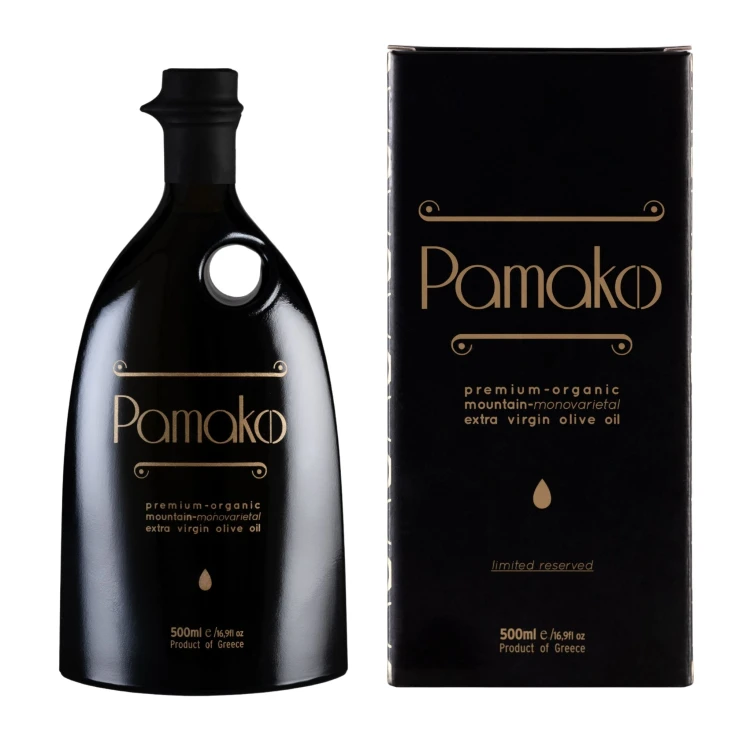
















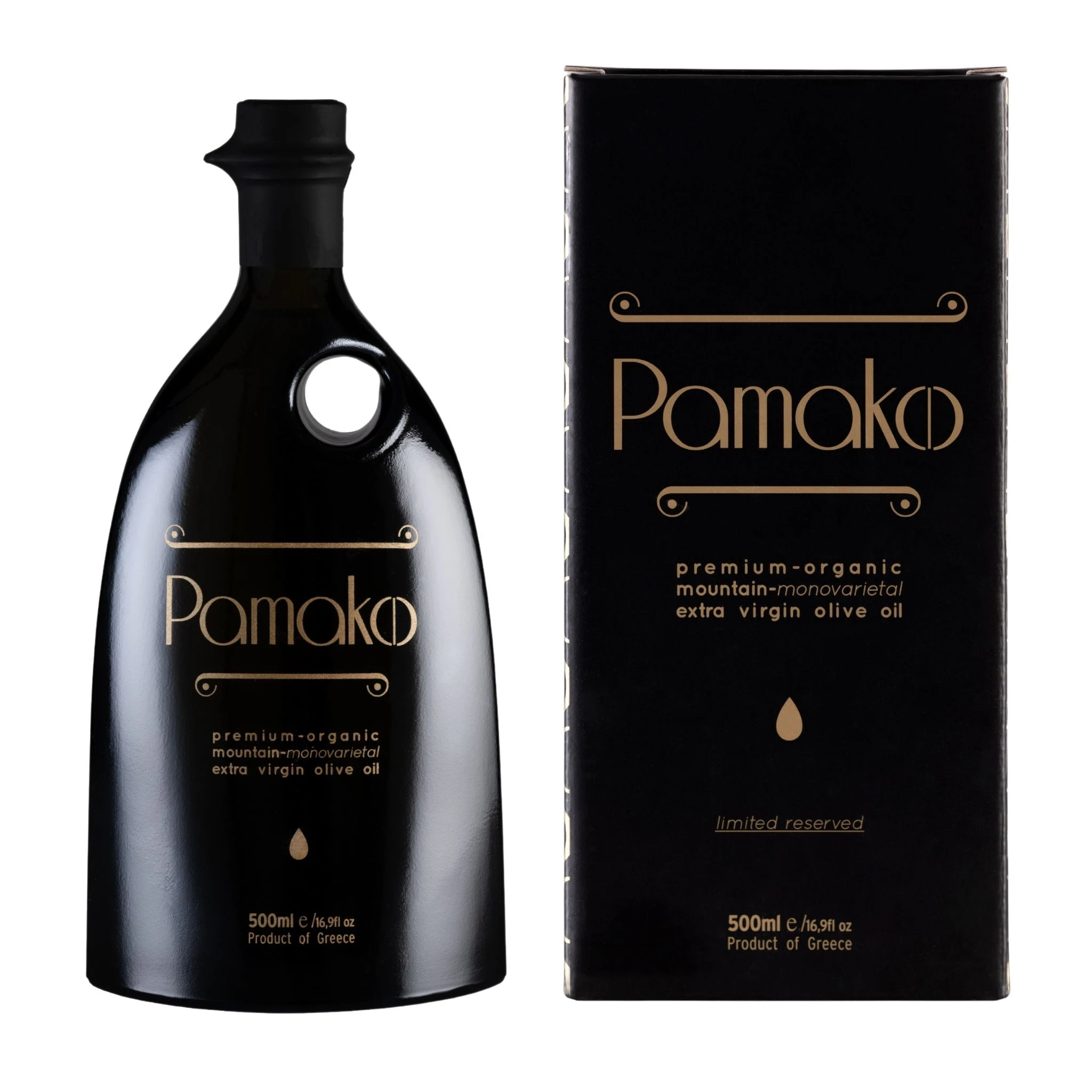
Pamako early harvest extra virgin olive oil ultra premium Tsounati Monovarietal 500ml Organic BOX (NMR: Total 2008 mg/kg, Index D1 1363 mg/kg)
Leave feedback on the product




Availability: a lot
Shipping time: up to 3 business days
EAN: 5214000405160
Manufacturer: Pamako
Shipping costs are not included in the price.
Shipping costs are not included in the price.
Share the product card




Ask about the product
Administratorem danych osobowych jest Kreta24 Sp. z o.o.. Przetwarzamy je w celu przesłania odpowiedzi na zapytanie. Więcej informacji dotyczących przetwarzania danych osobowych znajduje się w polityce prywatności.
Pamako Monovarietal – organic early harvest extra virgin olive oil from the Tsounati variety
Pamako Monovarietal is a mountain extra virgin olive oil from Crete, made 100% from a single variety – Tsounati. It comes from olives hand-picked in October from centuries-old trees growing at 500–700 m above sea level in the Selino area, Chania prefecture. It is a high phenolic olive oil: year after year its polyphenol content exceeds the threshold required by Regulation (EU) No 432/2012 several times over, and so does its Index D1 alone (oleocanthal + oleacein), as confirmed each season by independent laboratory analyses.
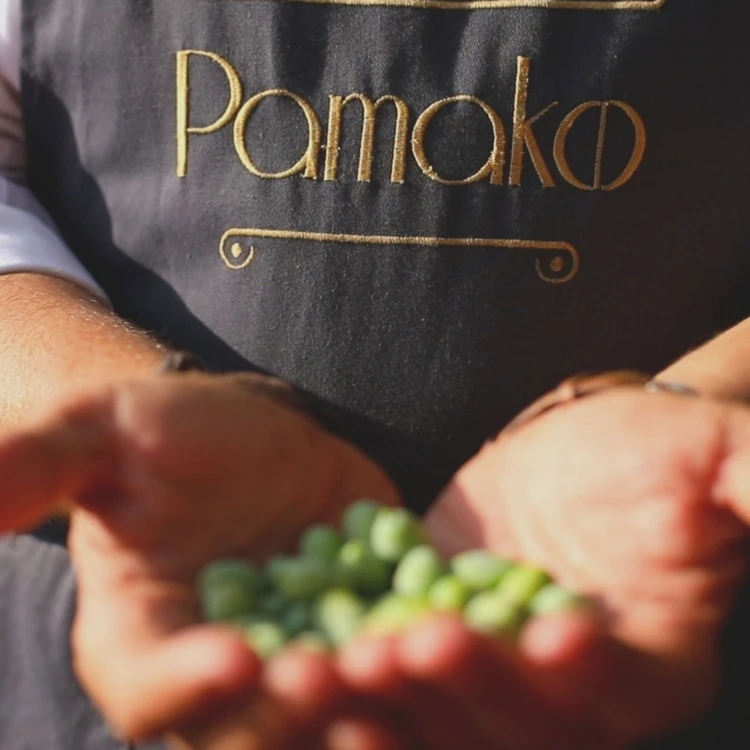
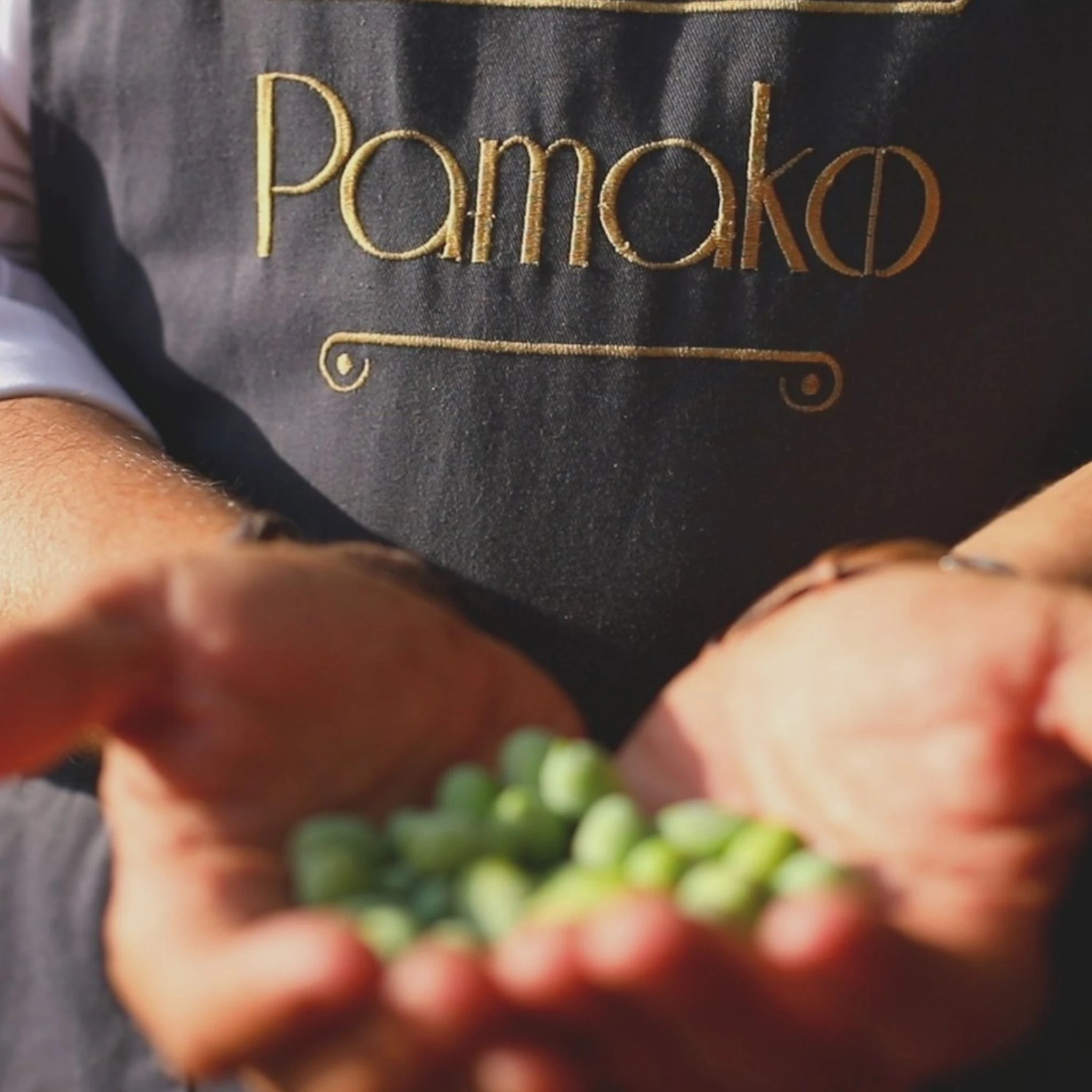
Behind it stands one man and his family groves – Eftychis Androulakis, who in 2014 turned the family's traditional olive growing into a small, modern producer focused entirely on quality. The name Pamako comes from Linear B script and means “medicine”.
Pamako Monovarietal at a glance
- 100% Tsounati variety (also known as Mastoidis and Athinolia)
- early harvest – picked by hand in October
- mountain groves at 500–700 m, near the ancient city of Elyros and the village of Agriles, Chania, Crete
- organic farming, certified organic (BIO)
- low-temperature extraction, protected from oxygen (argon)
- high phenolic olive oil eligible for the health claim under Regulation (EU) No 432/2012
- year after year the polyphenol content exceeds the threshold of Regulation (EU) No 432/2012 several times over – and Index D1 alone (oleocanthal + oleacein) exceeds it several times too
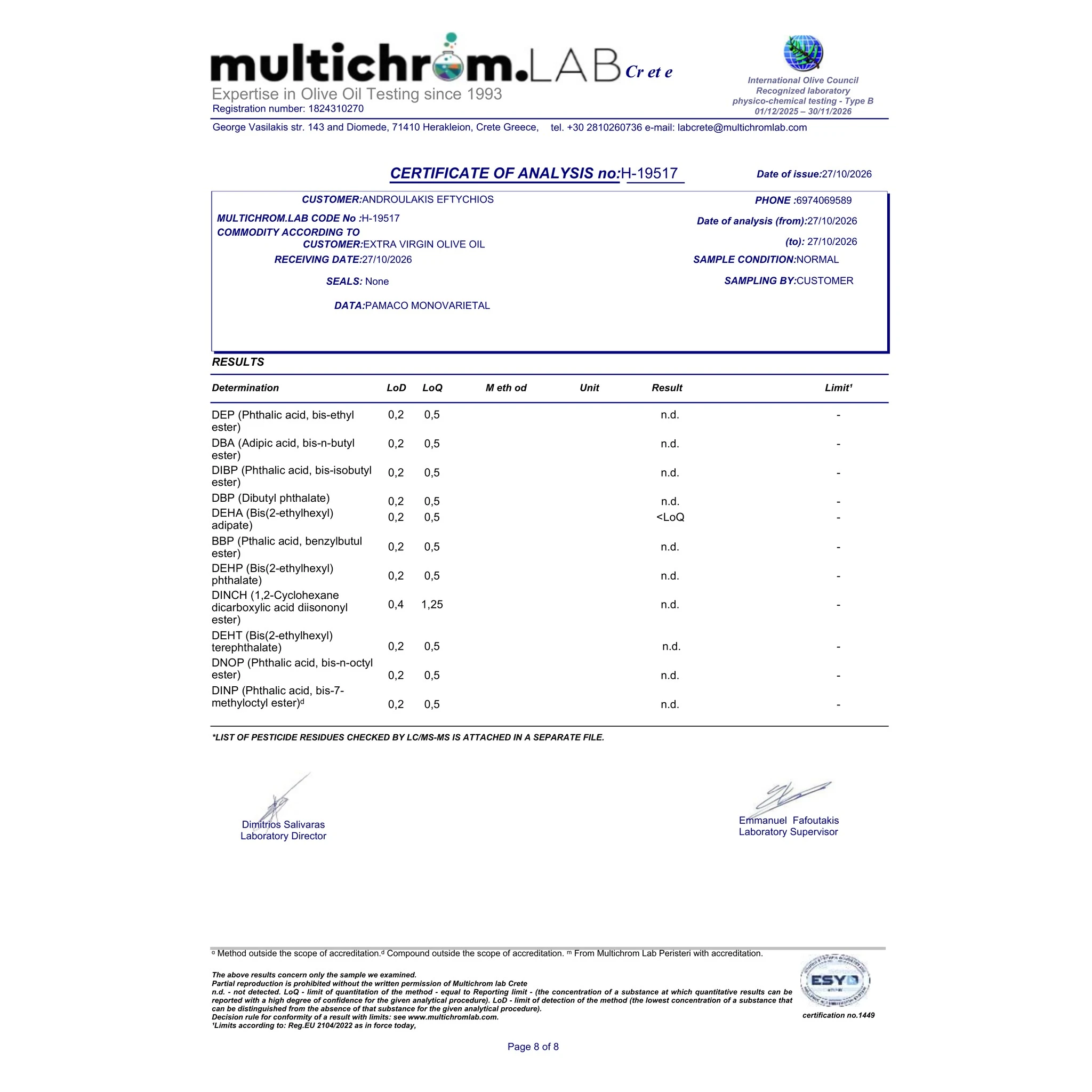
- every batch tested: polyphenols by NMR plus a full chemical analysis including pesticides, MOSH/MOAH and plasticisers
- dark glass bottle sealed with natural cork
- Kreta24 is the sole, exclusive distributor of Pamako in Poland
See how Pamako is made
Taste and aroma
A fresh, distinctly green and fruity aroma with notes of leaves, artichoke and herbs. On the palate, an elegant, noble bitterness and a strong, long pungency felt in the throat. That pungency is neither a flaw nor an additive – it is the natural signal of oleocanthal, one of the most valuable polyphenols in olive oil. The earlier the harvest and the higher the polyphenol content, the more clearly you feel it.
This is an intense oil. If you are new to high phenolic olive oils, we suggest starting with small amounts, used raw.
Tsounati – an old variety from the Selino mountains
Tsounati is one of the oldest olive varieties in Crete. Over the years it gave way to the higher-yielding Koroneiki, and Eftychis Androulakis set out to restore its standing and to show that old varieties have great value.
The family groves lie on a rocky mountainside in south-western Crete. No road leads to them – the pickers hike uphill for about half an hour. Some of the trees are several hundred years old and reach up to 14 metres, so they have to be climbed at harvest. According to Eftychis, local people protected these trees for generations even more than their own homes, which is how they survived the wars.
The producer deliberately avoids frequent, heavy pruning. He believes a tree that does not have to rebuild its crown every year puts more of its strength into the fruit. Neighbours once called him crazy – today they ask him for advice.
Harvest in October instead of February
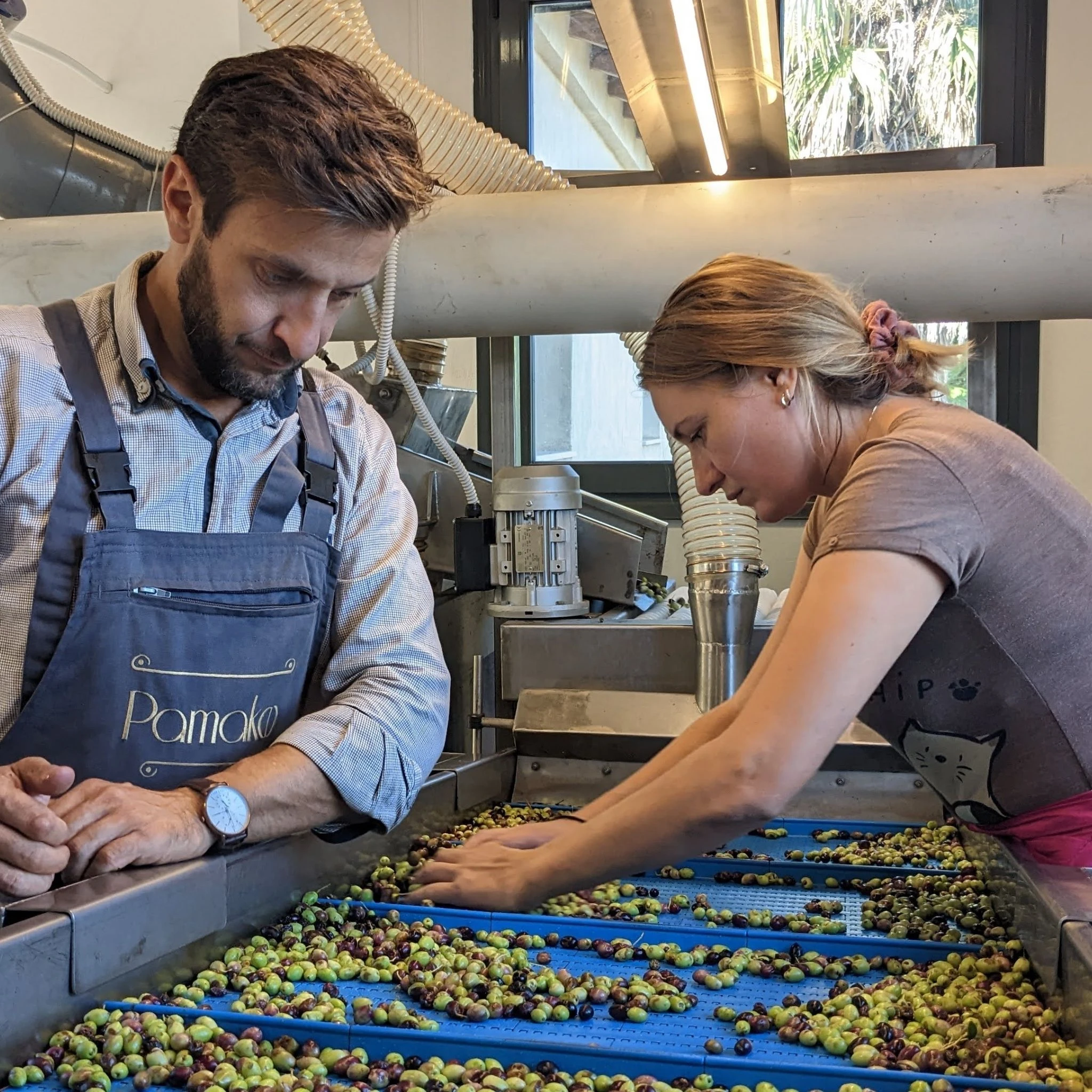
Traditionally, olives in this area were picked in winter. Eftychis moved the harvest to October, when the fruit is still green. This gives less oil per kilogram of olives but – as he points out – nearly tripled the polyphenol content. Only the best, selected fruit goes to the mill.
The mill: no oxygen, low temperature
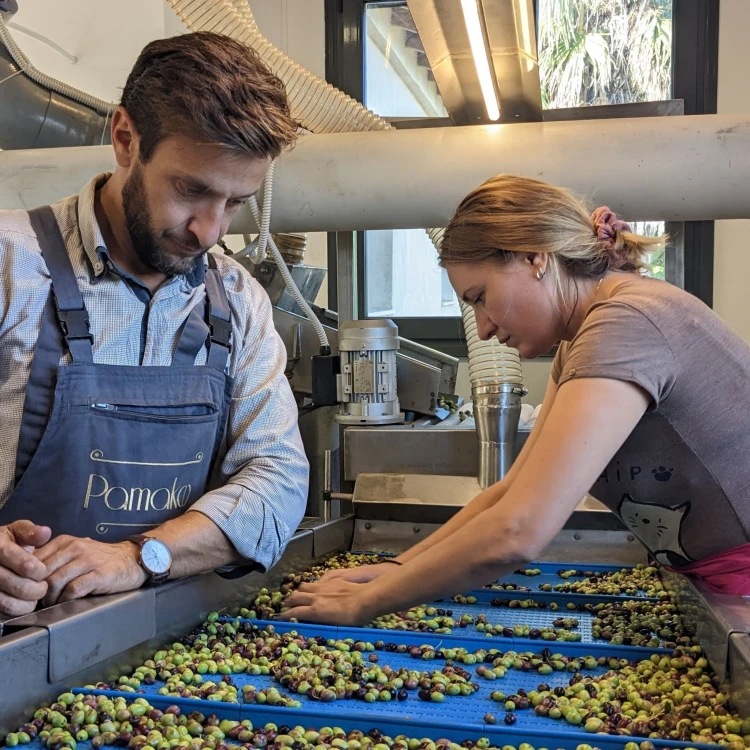
The quality of a high phenolic olive oil depends on every step after harvest. At Pamako the process looks like this:
- olives sterilised in UV-C chambers instead of traditional washing with water,
- low-temperature (cold) extraction,
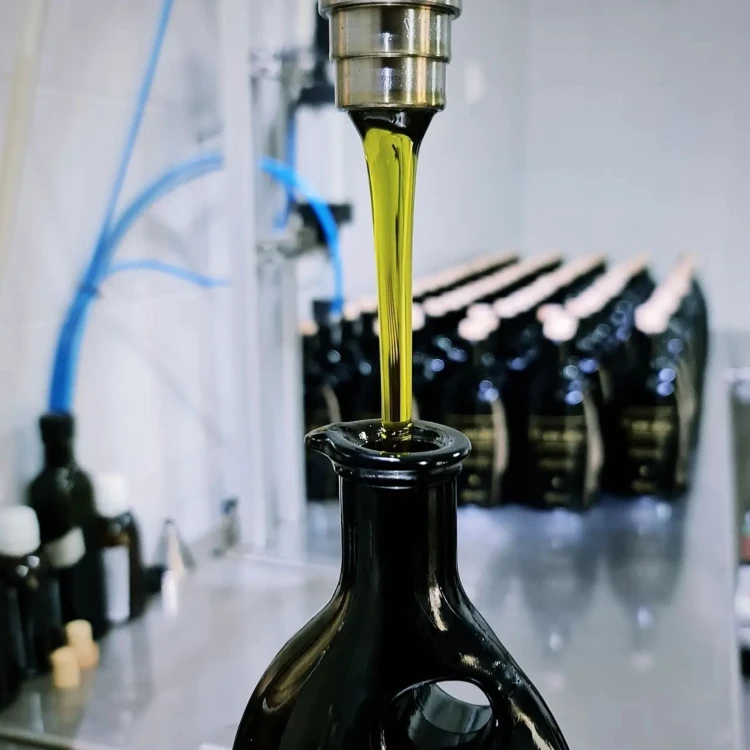
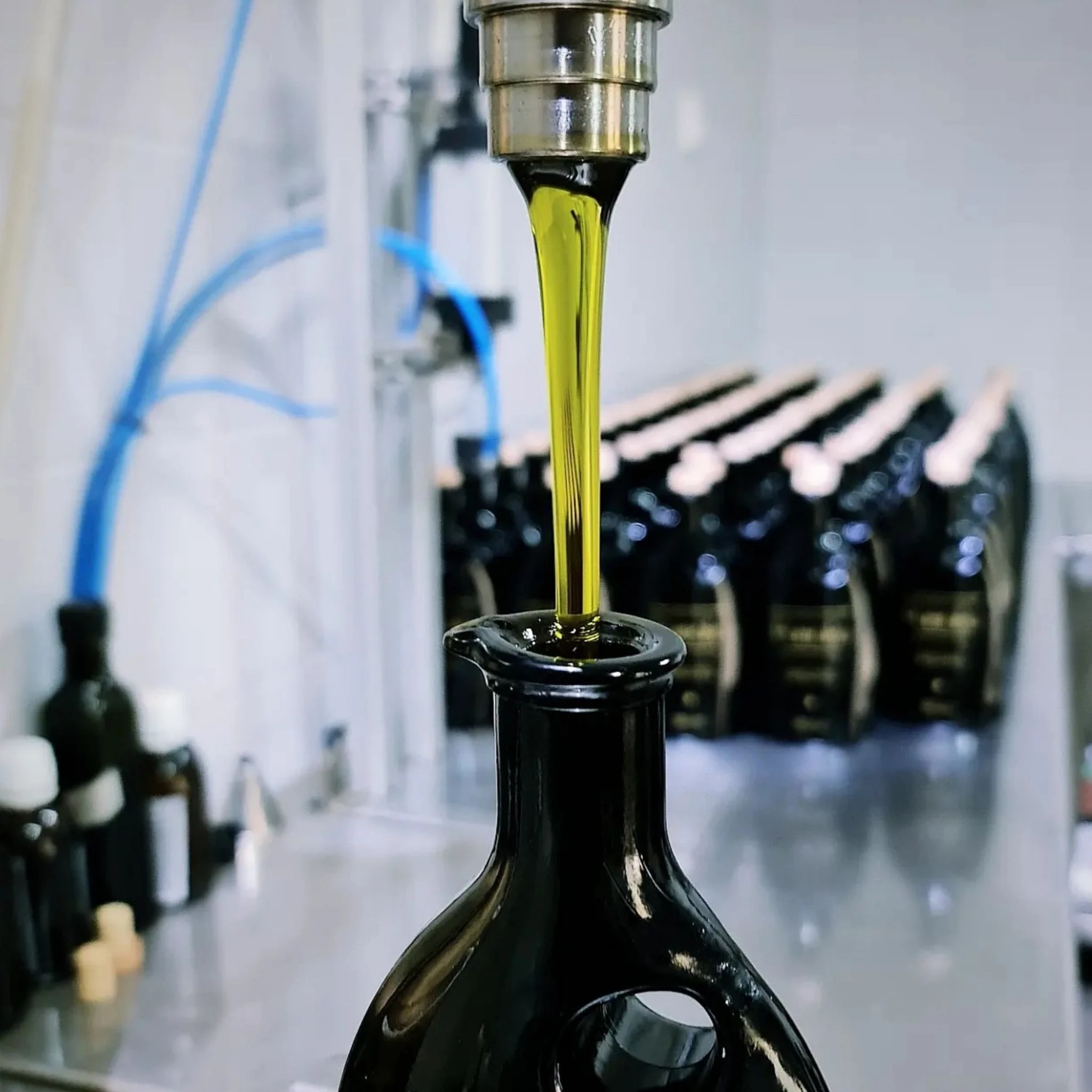
- argon – an inert, food-approved gas – keeps the oil away from oxygen during production and bottling,
- storage in stainless steel tanks at controlled temperature and away from light.
Eftychis Androulakis holds two international patents for olive mill machinery. Before the first bottle of Pamako went on sale, he spent four years gathering knowledge in Italy, Spain and Greece, attended tasting seminars and experimented with extraction methods over several seasons.
Pamako also works with the Cretan producer Biolea (Chloe Dimitriadis) – in their shared mill two lines run side by side: a traditional stone line and a modern stainless steel one.
A bottle designed to protect the oil
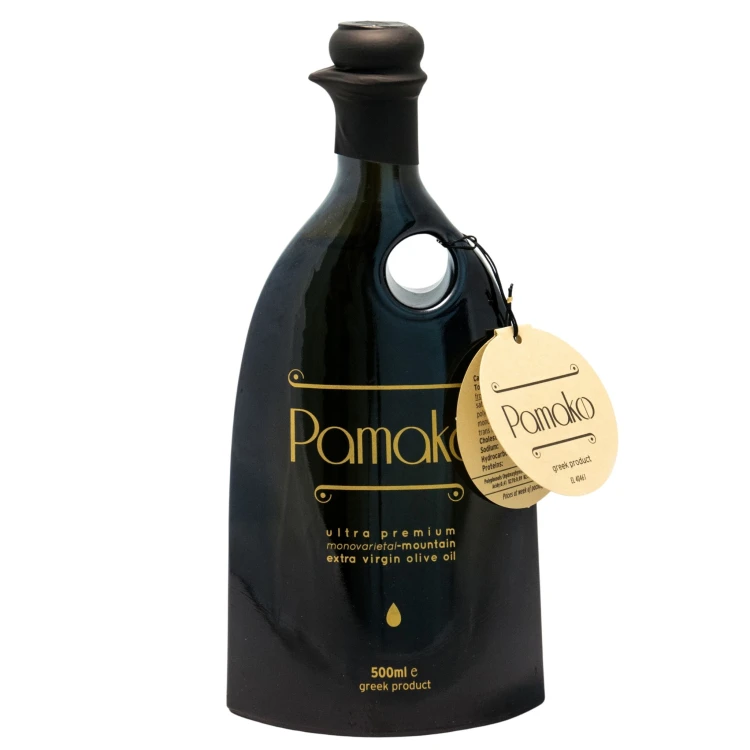
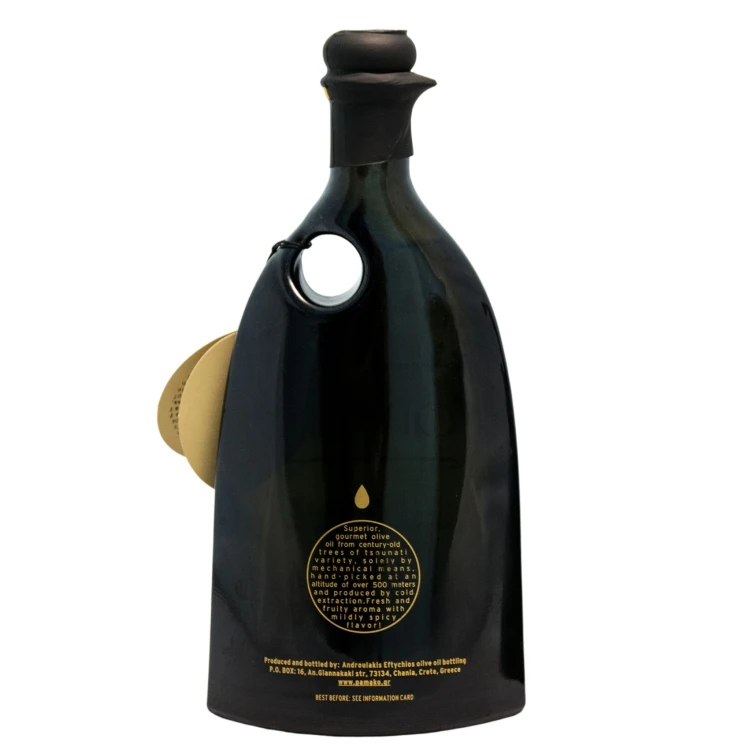
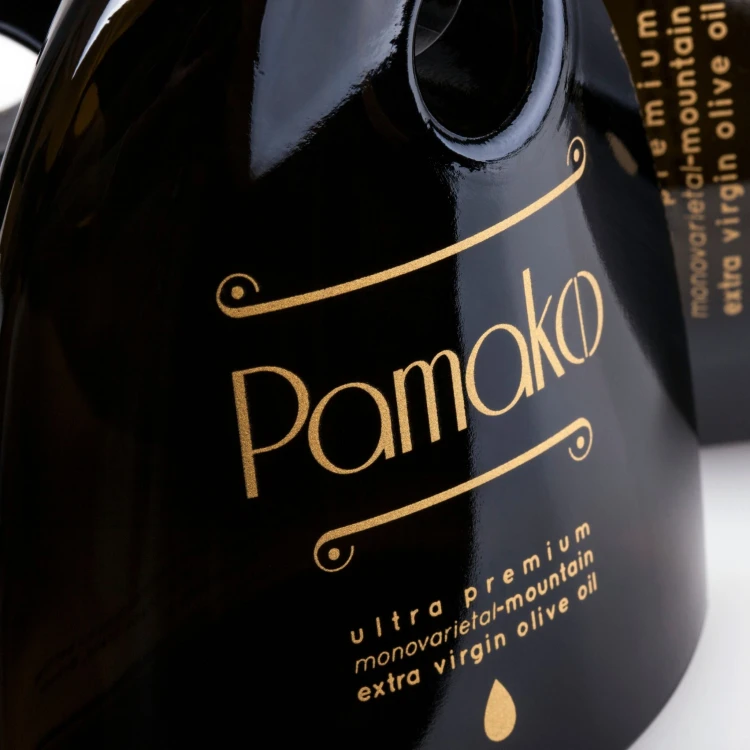
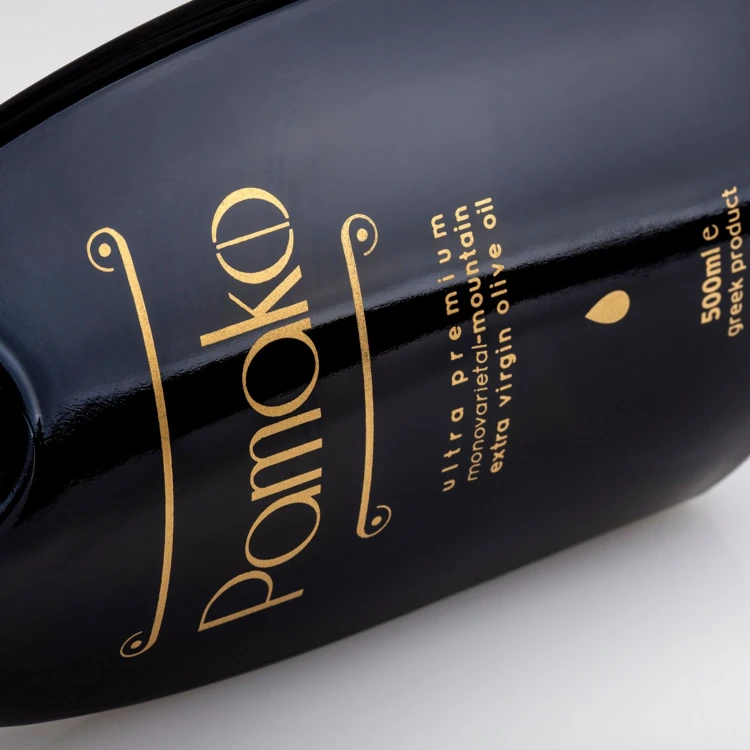
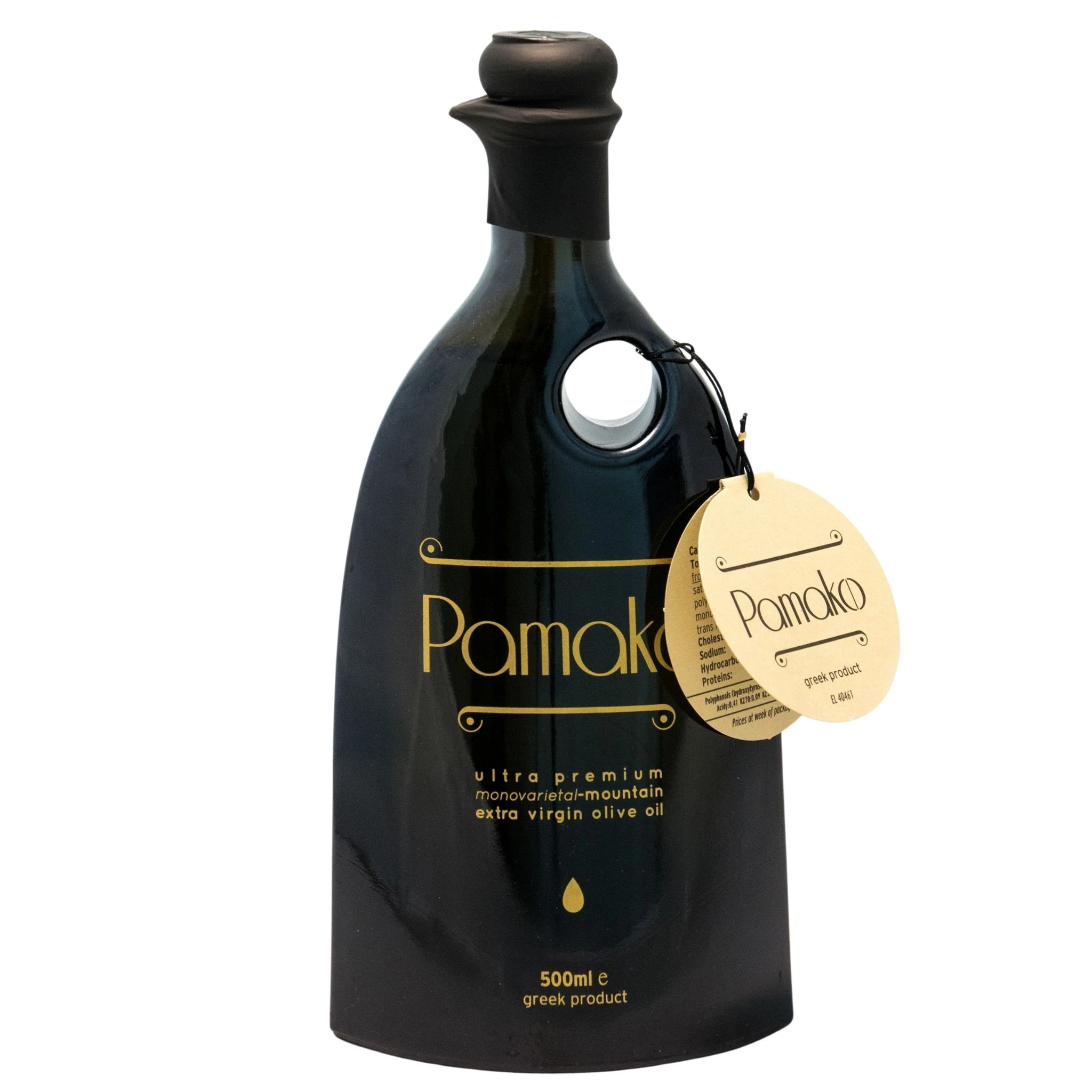
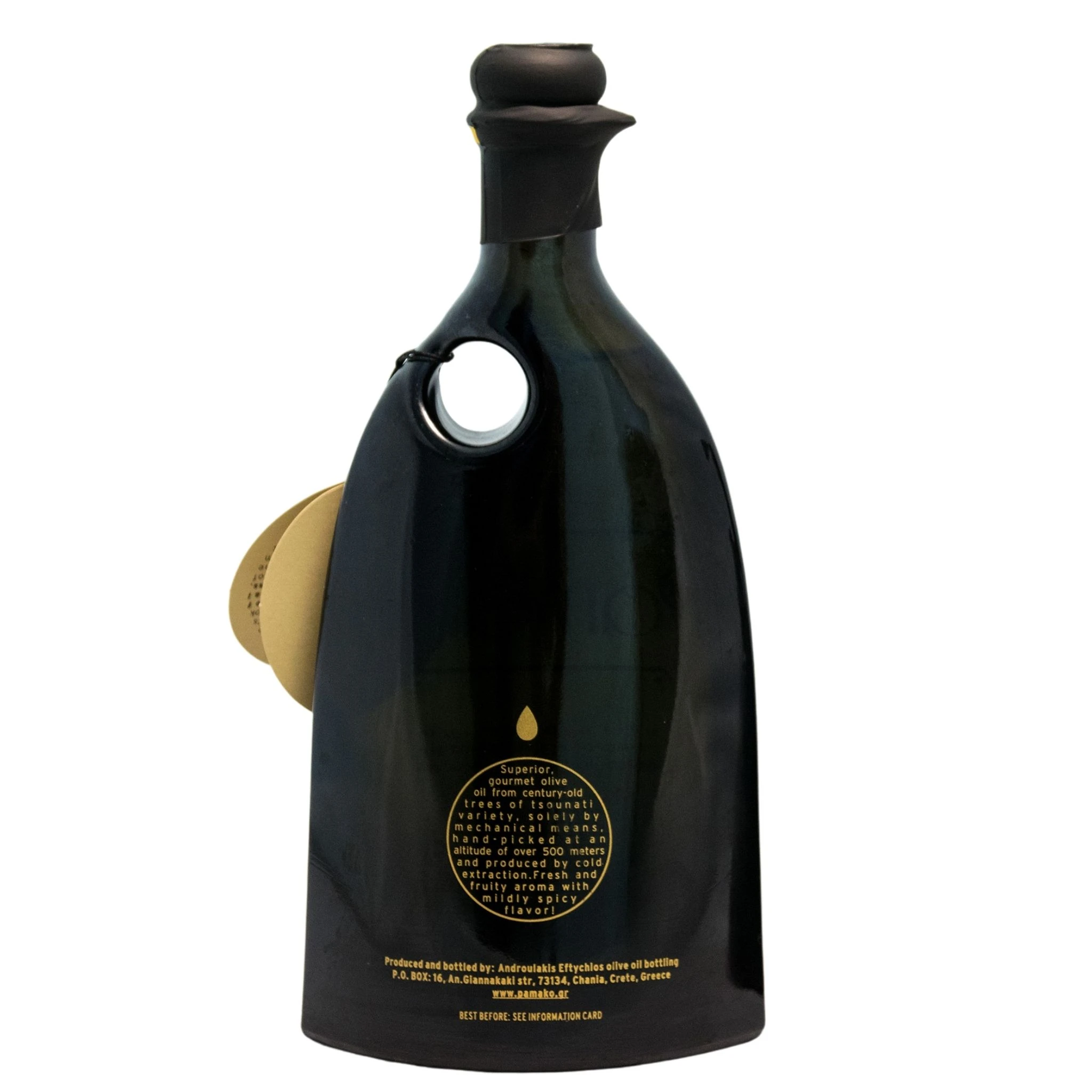
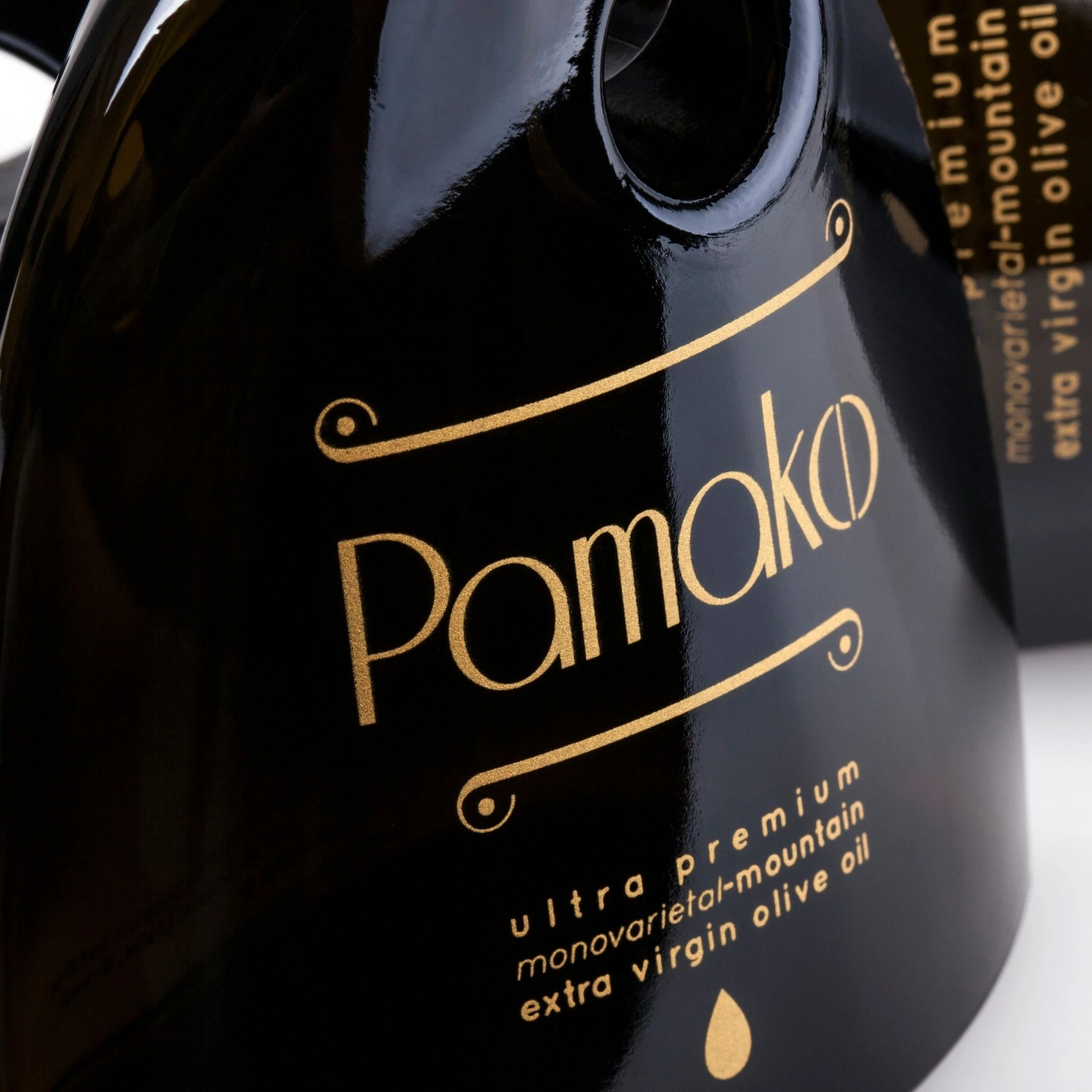
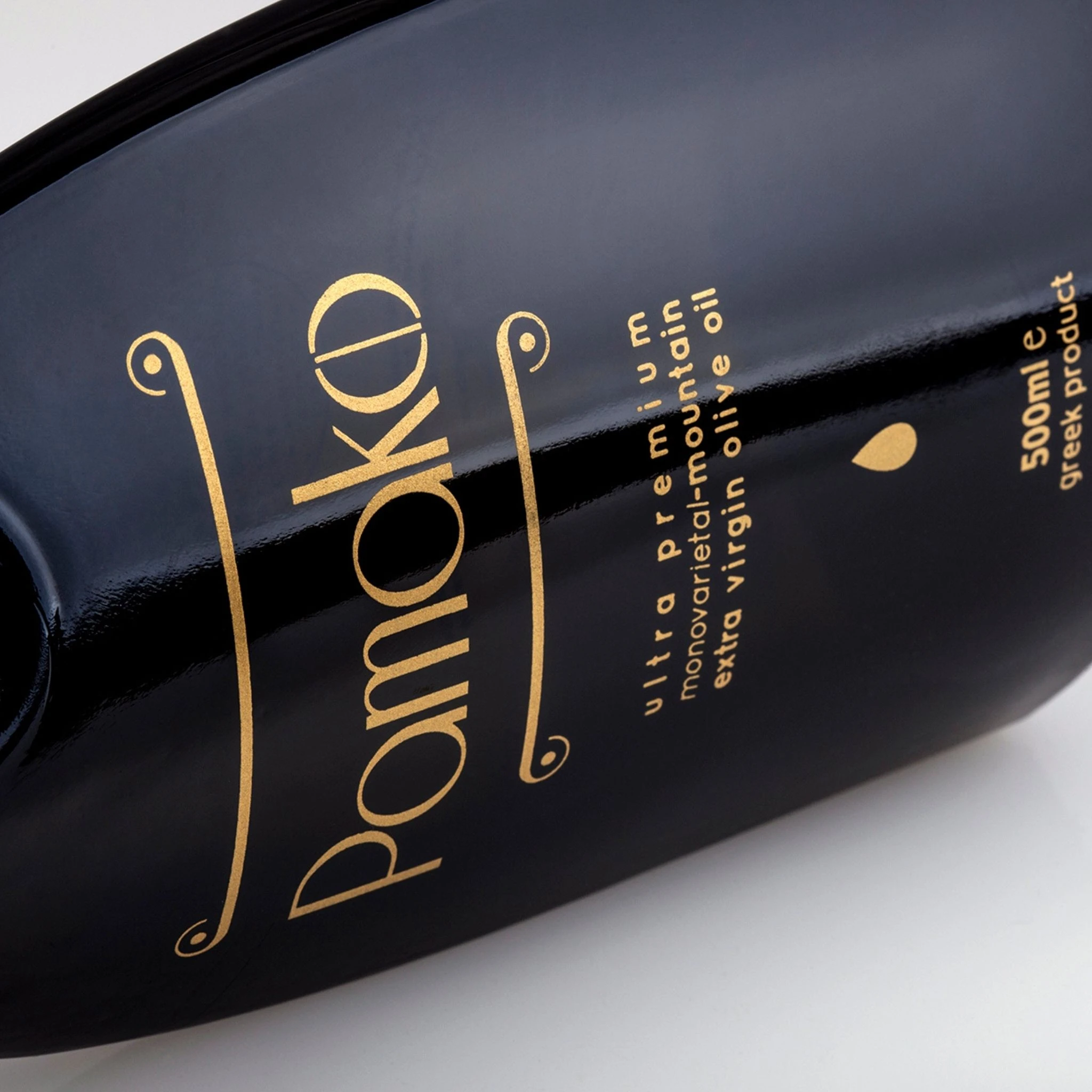
The oil is filled into dark glass, which protects it from light. Air in the bottle is displaced with argon, and the closure is a natural Portuguese cork with a wooden top. The label is attached by hand with fishing line. It is a hand-finished, artisan package – and it makes a fine gift.
Polyphenols and the health claim
Pamako was one of the first two Greek olive oils confirmed as eligible for the health claim under Commission Regulation (EU) No 432/2012:
Olive oil polyphenols contribute to the protection of blood lipids from oxidative stress.
The claim may be used only for olive oil which contains at least 5 mg of hydroxytyrosol and its derivatives per 20 g of olive oil. The beneficial effect is obtained with a daily intake of 20 g of olive oil.
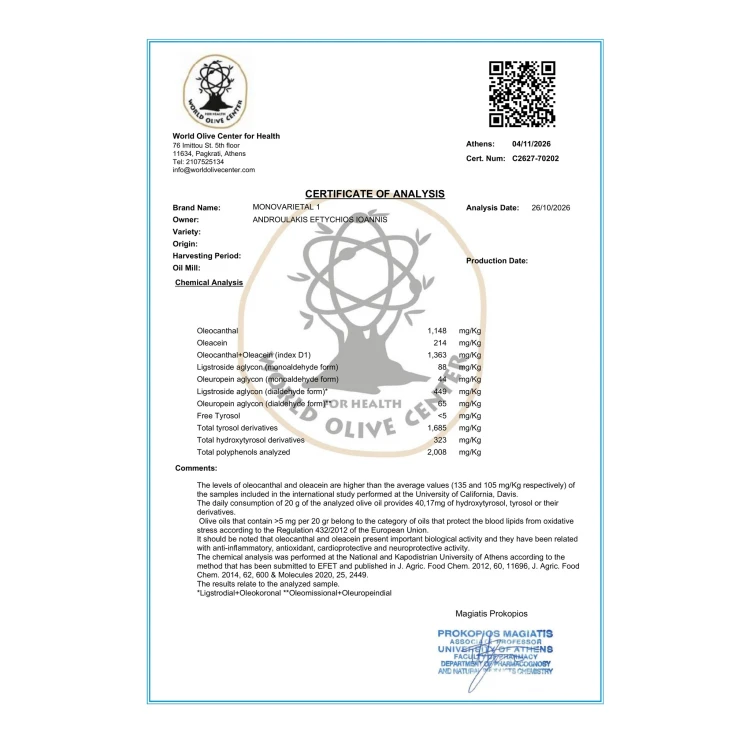
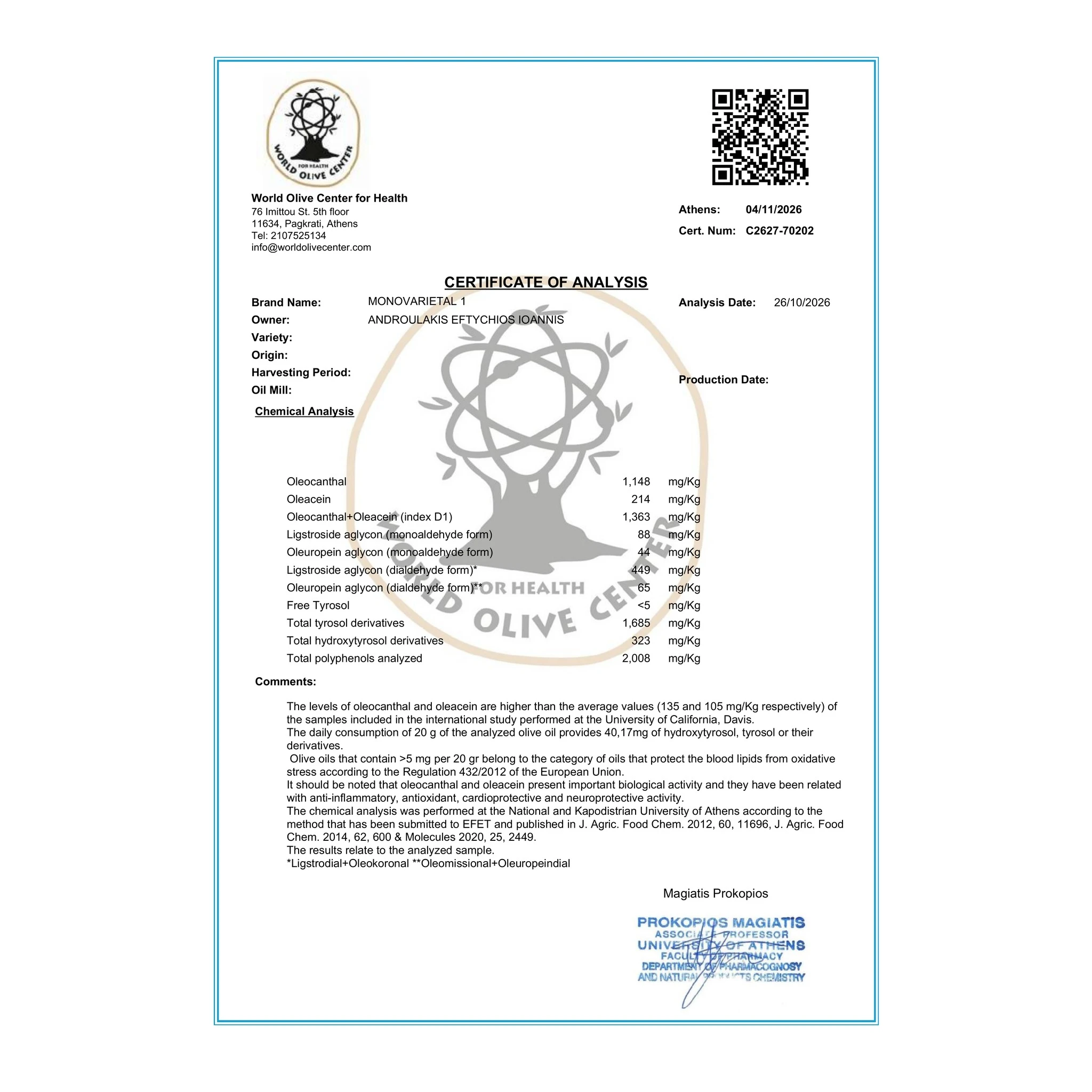
Year after year, Pamako Monovarietal exceeds this threshold several times over. This is not the result of one good season but a repeatable characteristic of this oil, confirmed by an NMR certificate for every new batch.
The same applies to Index D1 – the sum of oleocanthal and oleacein, the two dominant polyphenols in Pamako. Both belong to the tyrosol and hydroxytyrosol derivatives covered by the regulation, and Index D1 alone, without the remaining polyphenols, exceeds the EU threshold several times over, year after year.
20 g of olive oil is about one and a half tablespoons.
Test results – always current for each batch
Polyphenol content changes from season to season, as it depends on the weather and the harvest date. That is why we do not put figures in this description; instead we always provide the current documents for the batch on sale:
- NMR certificate – polyphenol analysis (oleocanthal, oleacein, Index D1, total polyphenols) performed at the National and Kapodistrian University of Athens; the certificate is issued by the World Olive Center for Health and signed by Prof. Prokopios Magiatis,
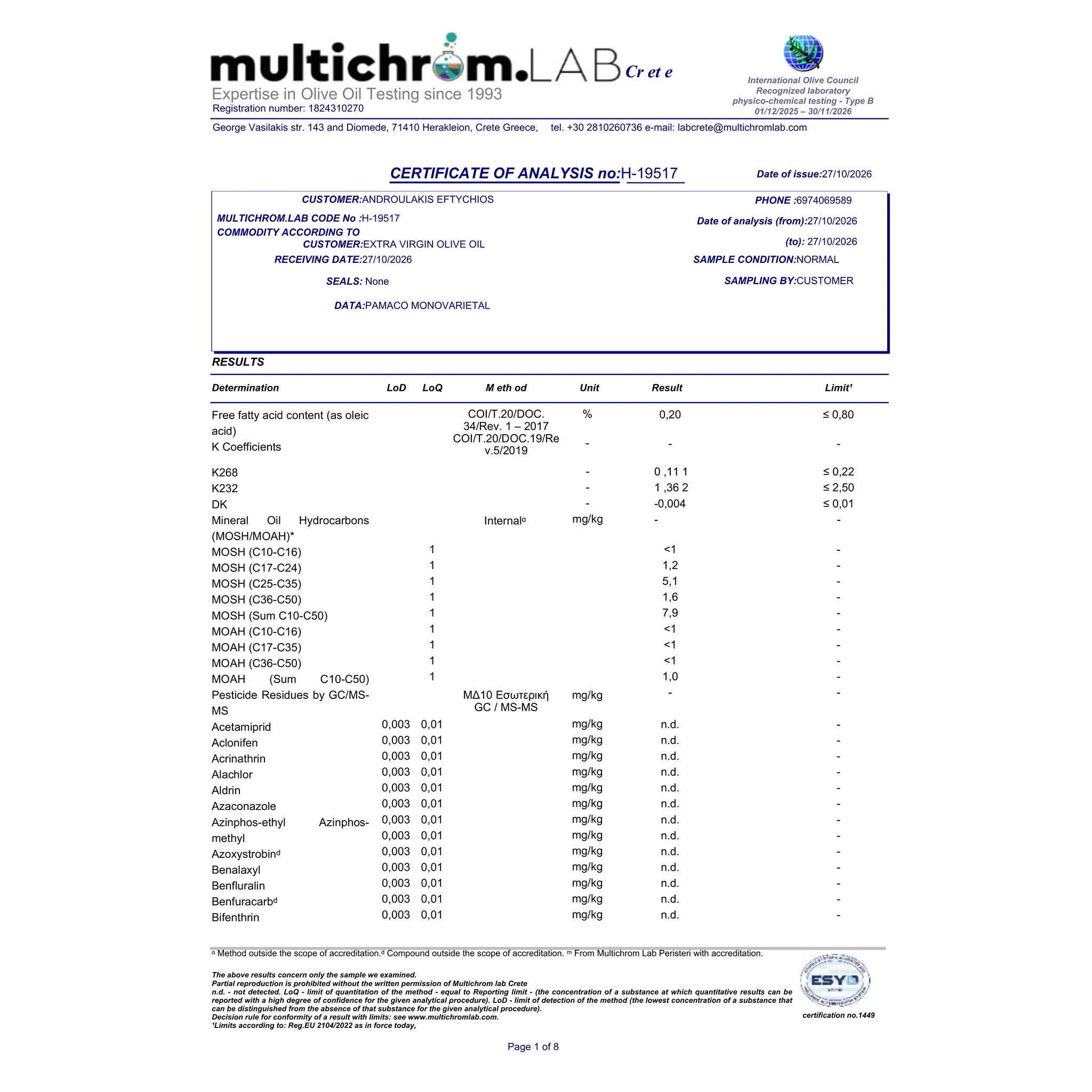
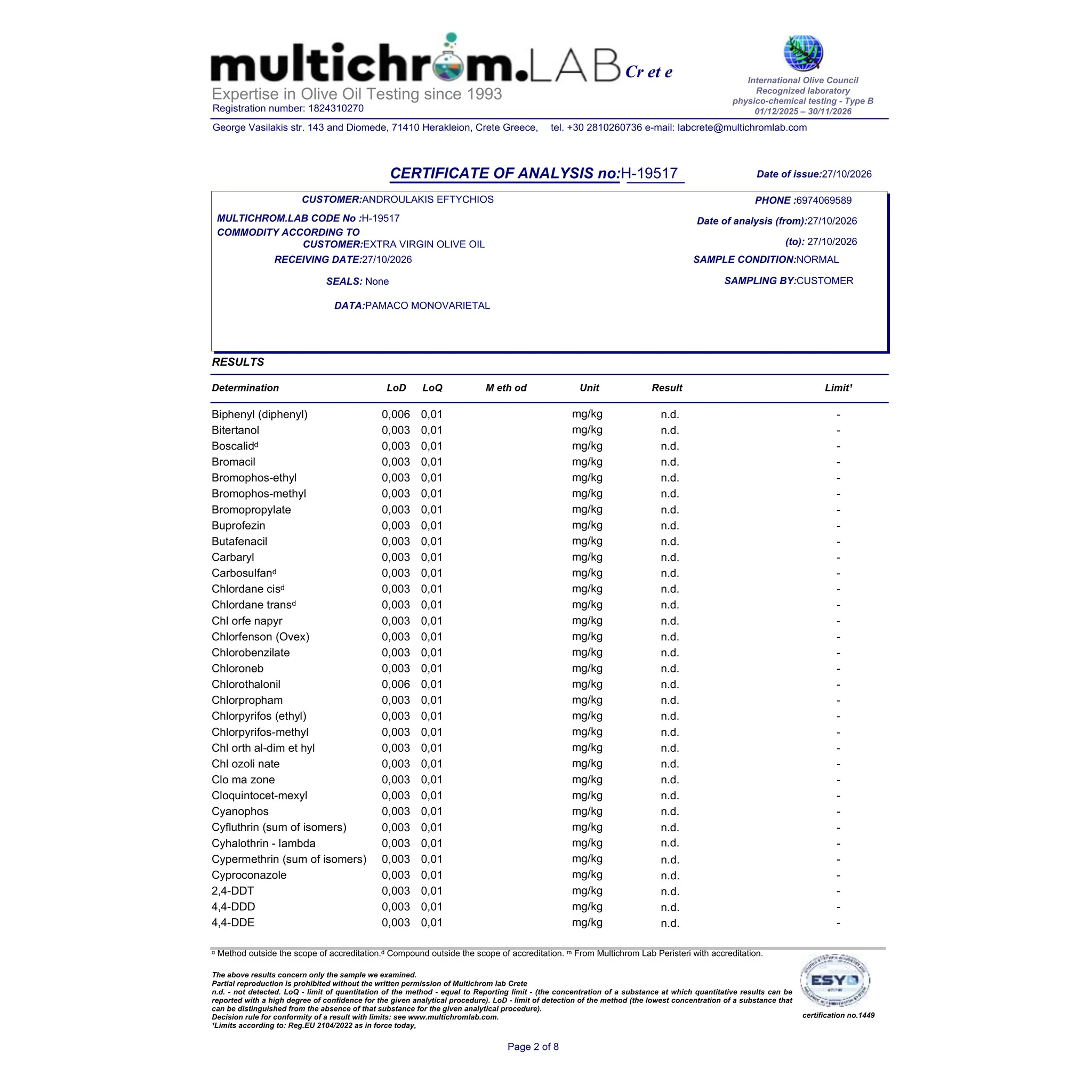
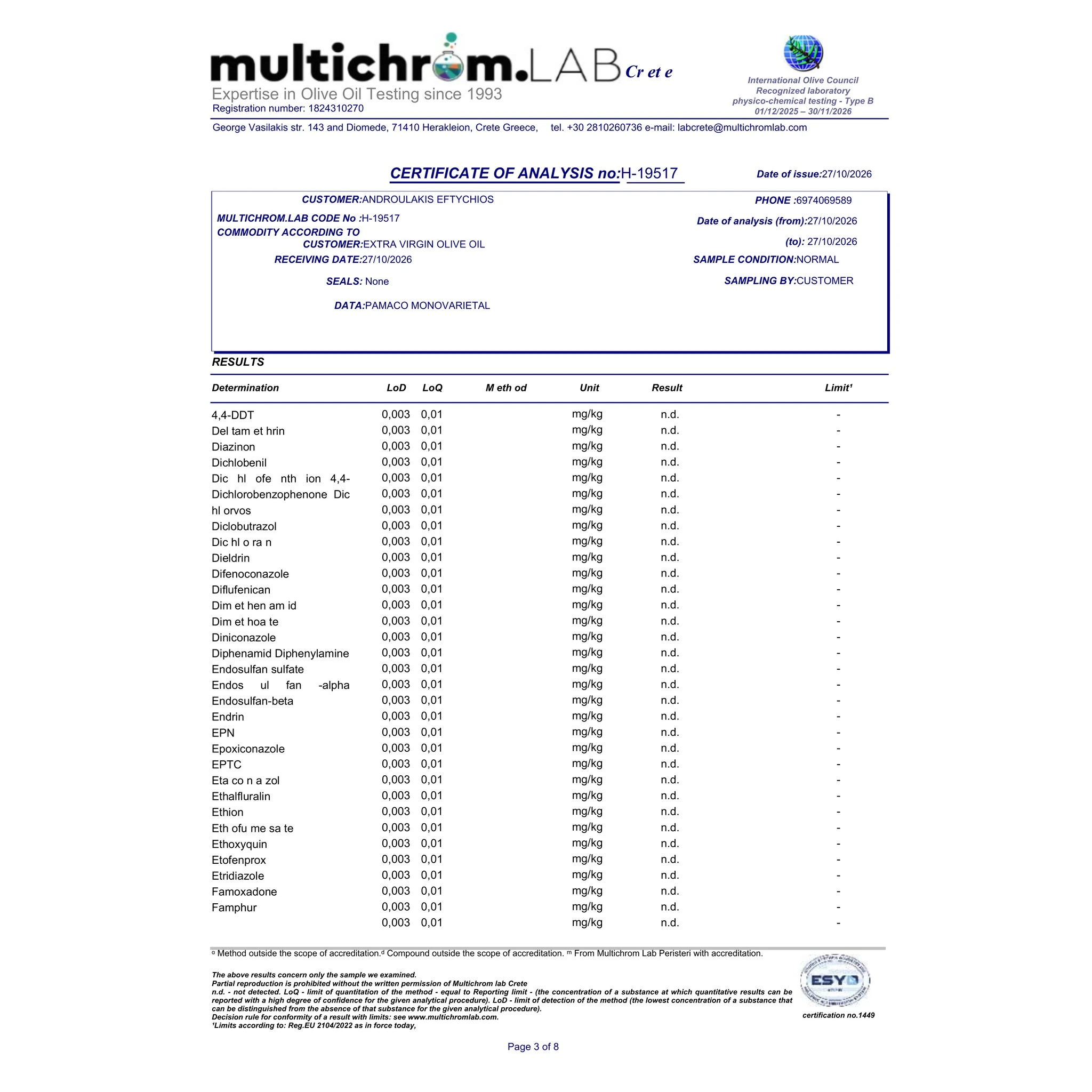
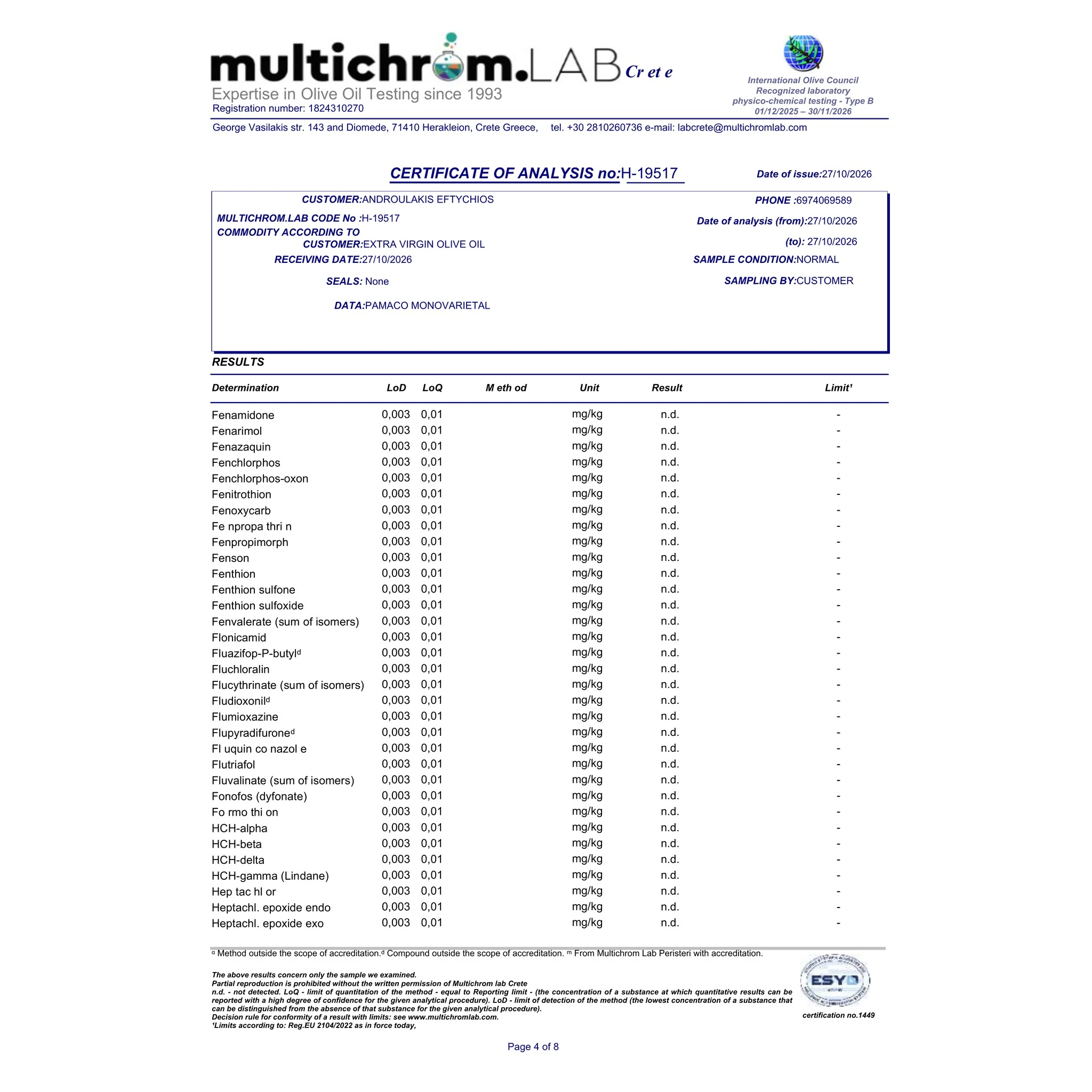
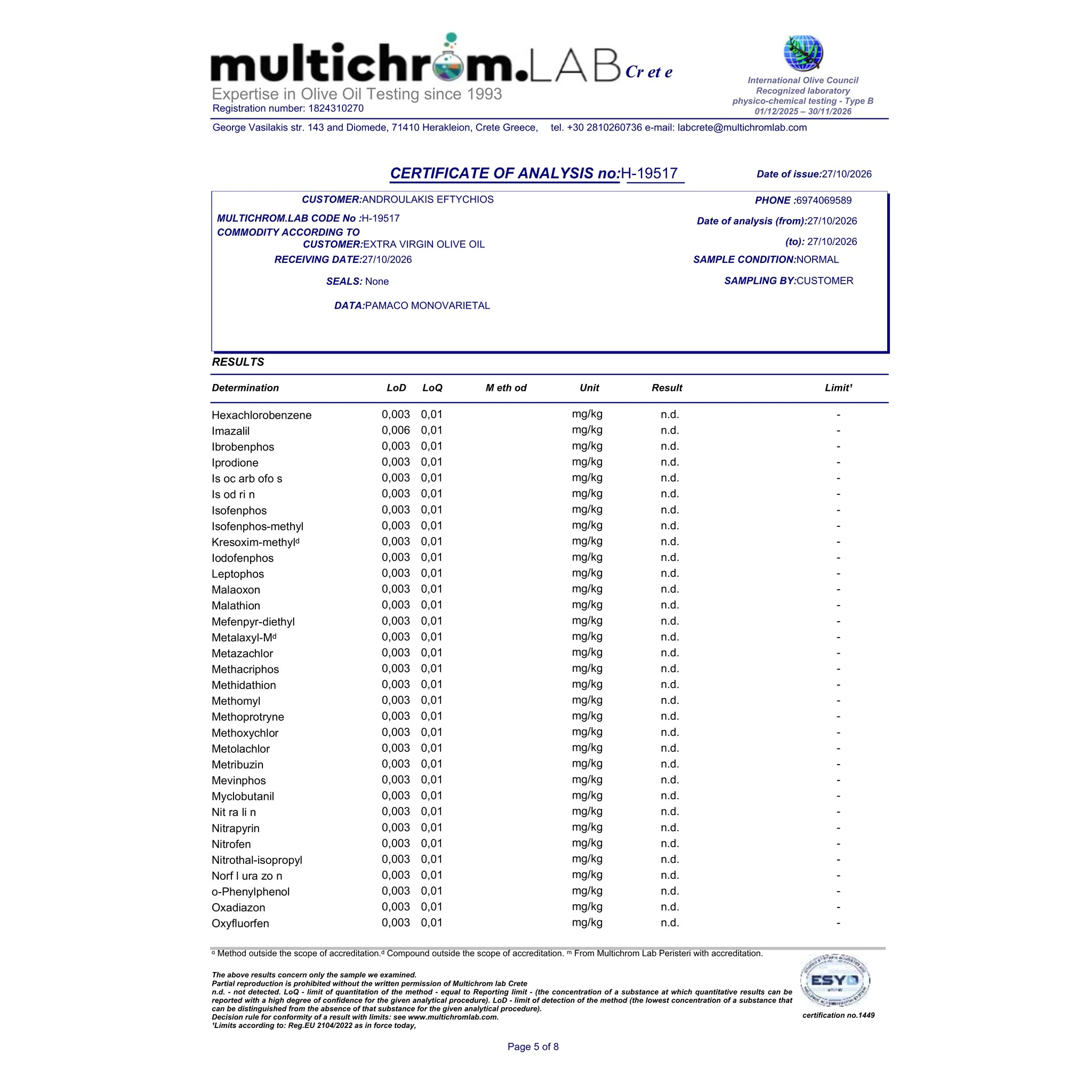
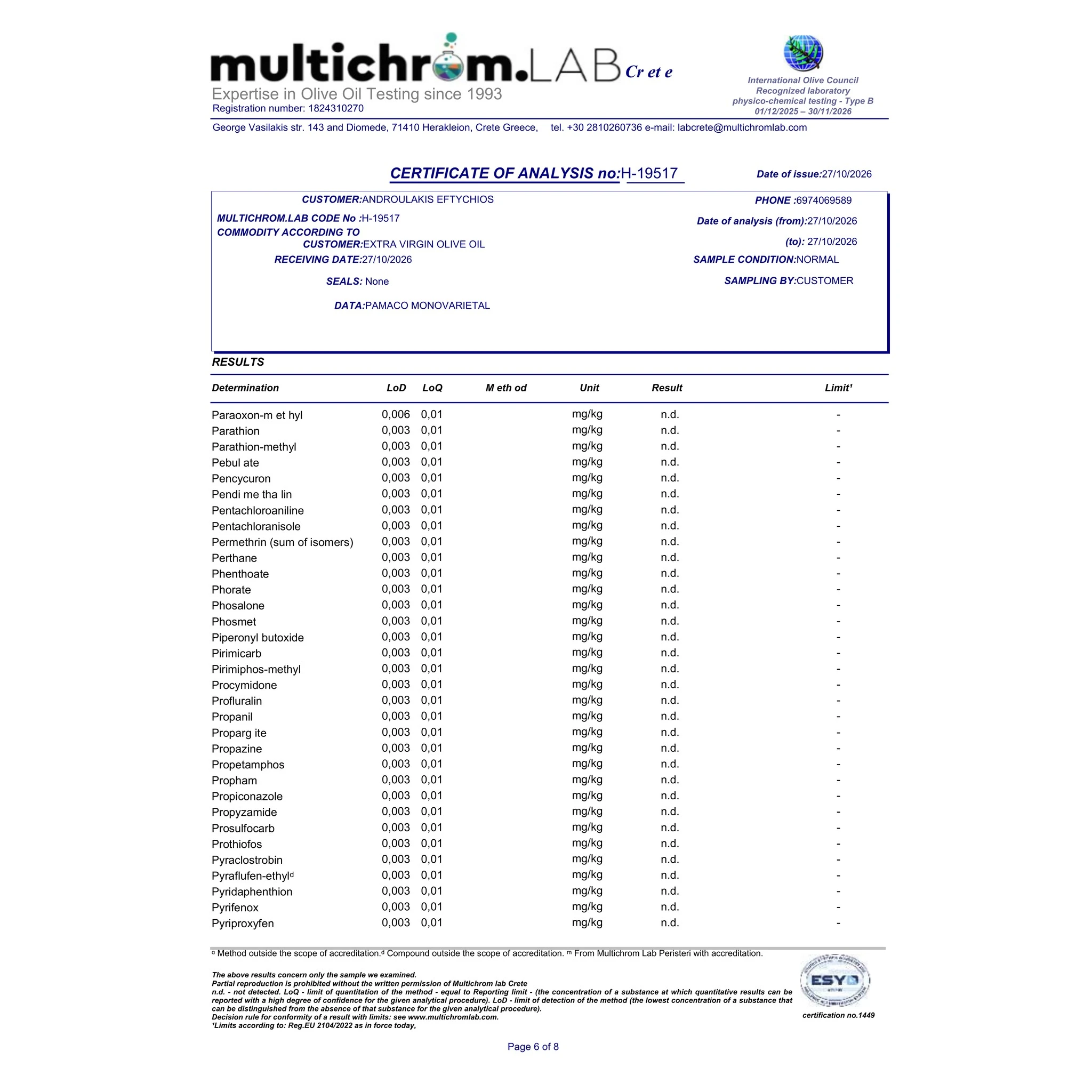
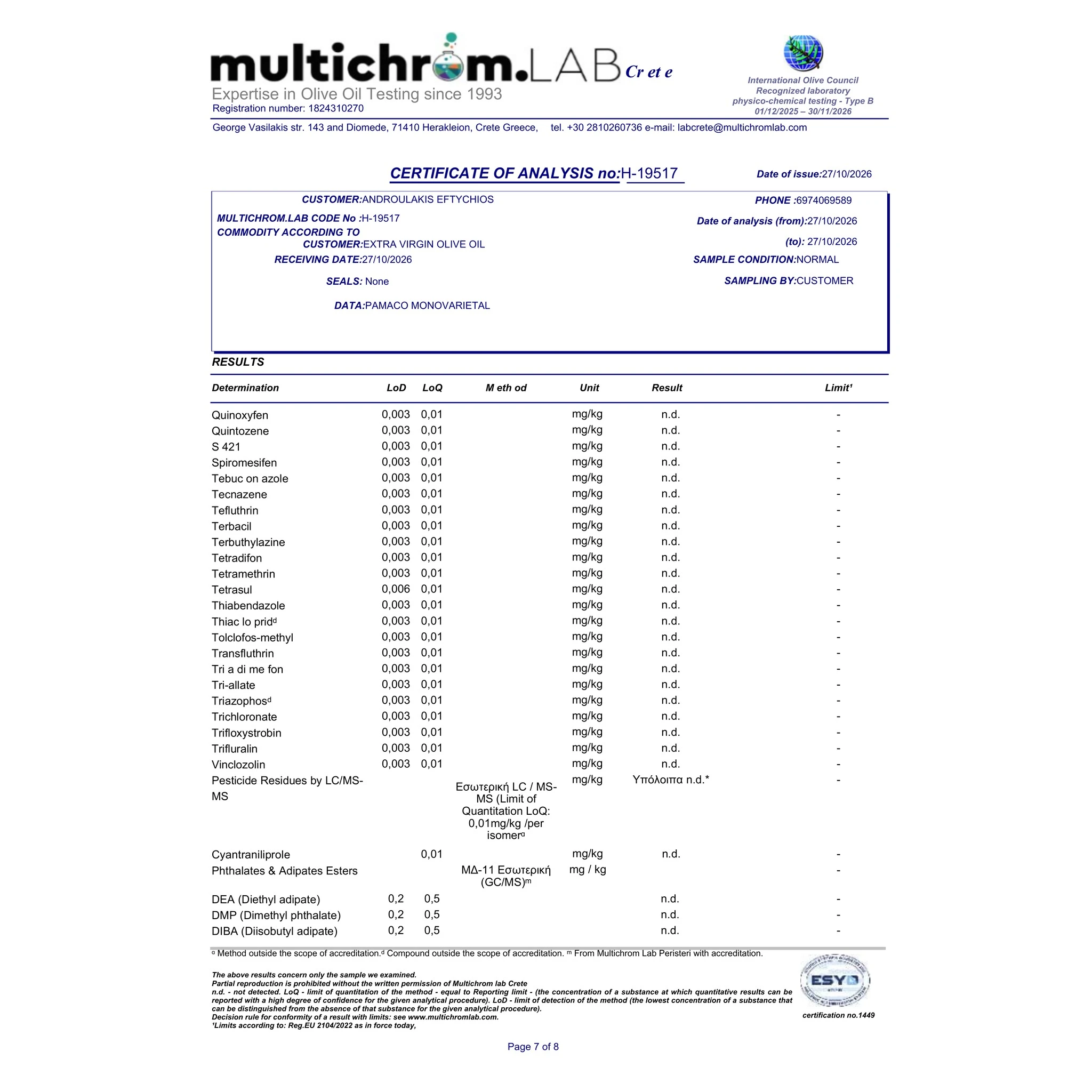
- chemical analysis – acidity, K coefficients, pesticide residues, mineral oil hydrocarbons MOSH/MOAH and plasticisers (phthalates), performed in a laboratory recognised by the International Olive Council (IOC).
You will find the certificates in the product photo gallery (from the second image) and in the files to download on this page.
Pamako in scientific research
The producer has worked with scientists at the University of Athens for years and provides his oil for polyphenol research. In 2026 the peer-reviewed journal “Nutrients” published a paper by a team from the Hellenic Pasteur Institute, the Department of Pharmacy of the University of Athens and the National Hellenic Research Foundation, in which Pamako olive oil was the source of the phenolic compounds studied. It was a preclinical study carried out in an animal model – its results cannot be directly extrapolated to humans.
We describe the study, its results and its limitations in more detail on our blog (in Polish): Pamako polyphenols in the study published in “Nutrients”.
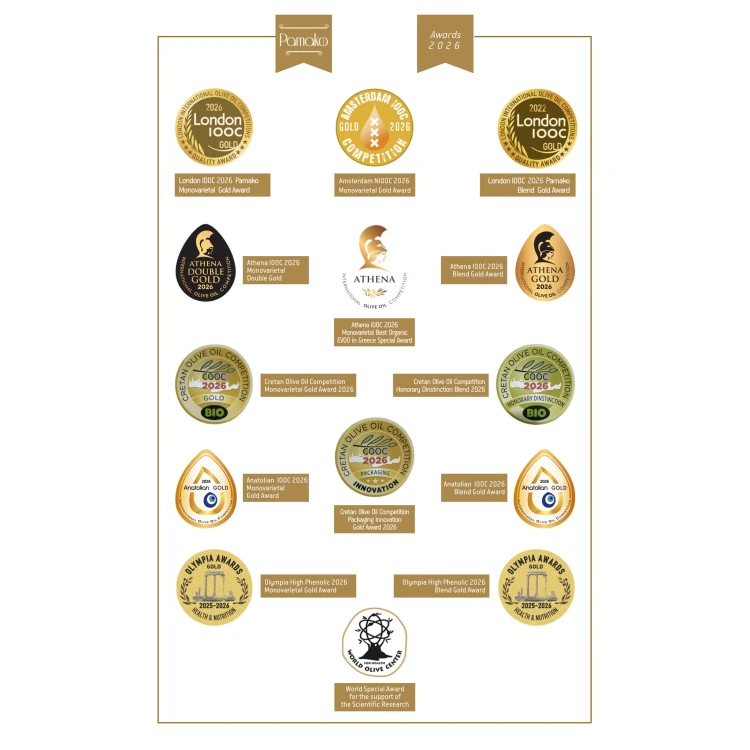
For its support of science, in 2026 Pamako received the World Special Award for the support of scientific research from the World Olive Center for Health.
Awards and recognition
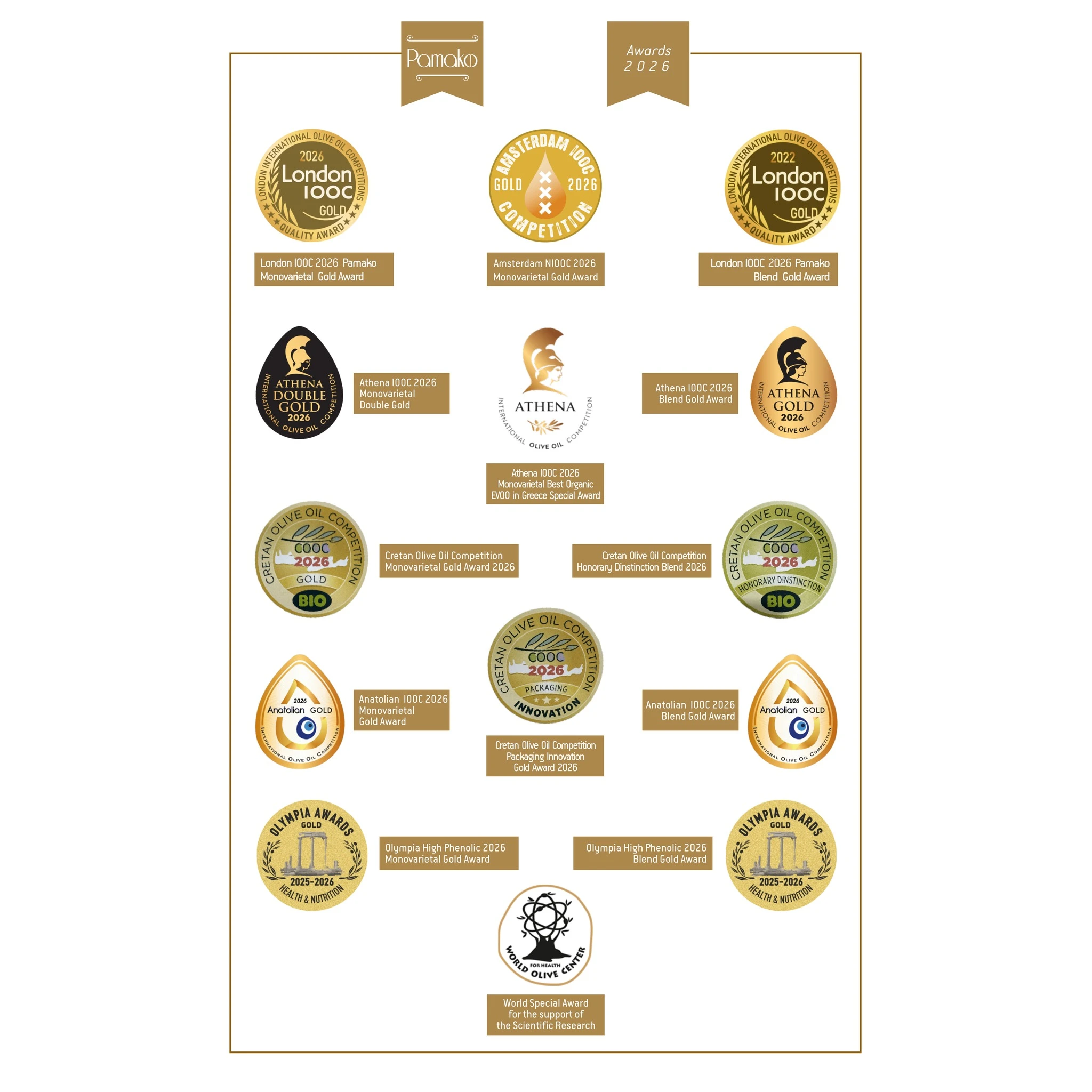
Pamako has won hundreds of awards – for flavour as well as for health-related parameters. Monovarietal regularly wins gold medals at competitions including the Athena International Olive Oil Competition, the Olympia Health & Nutrition Awards (high phenolic category), the Cretan Olive Oil Competition, London IOOC, Amsterdam IOOC, Anatolian IOOC and BIOL. At Athena it has also received the special award for the best organic extra virgin olive oil in Greece.
In the EVOO World Ranking 2025, Eftychis Androulakis's company ranked 10th among producers from Greece, and Pamako Tsounati was among the top 100 olive oils in the world. The oil is sold in 60 countries, and in Belgium, France and Luxembourg it has also been approved for sale as a food supplement and is available in pharmacies.
You will find the current season's list of awards in the product photo gallery.
How to use it
- raw – this keeps its full aroma and polyphenols: a tablespoon a day, ideally with a meal,
- on salads, tomatoes, pulses, hummus and spreads,
- as a finishing oil on soups, grilled vegetables, fish, meat and pasta,
- with bread – with a pinch of sea salt and oregano.
Given its intense flavour and value, we do not recommend this oil for frying – it would be a waste of its character.
Storage
Store in a cool, dark place, away from the cooker and direct sunlight, in a tightly closed bottle. Once opened, it is best used within a few months – polyphenols and aromas naturally fade over time. At low temperatures the oil may turn cloudy; this is natural and disappears at room temperature.
Available sizes
- 500 ml BOX – bottle in a box,
- 250 ml – a smaller bottle, good for a first try or as a gift.
Both sizes contain the same oil from the same batch.
Other Pamako olive oils in our range
- Pamako Blend 250 ml and 500 ml – a blend of Tsounati (60%) and Koroneiki (40%), also organic and high phenolic, with milder bitterness and pungency than Monovarietal,
- Pamako Experimental Edition – a set of three 250 ml bottles from the same Tsounati variety, harvested at three different times; for those who want to compare how the harvest date changes the flavour of the oil,
- Pamako 3 L Bag in Box – a budget version for everyday cooking, available from time to time. This oil comes from the end of the harvest and has much lower parameters (including polyphenol content) than the bottled oils – it is not the same oil as Monovarietal and Blend in glass.
Pamako at Kreta24
Kreta24 is the sole, exclusive distributor of Pamako olive oil in Poland. We have imported it directly from the producer without interruption since the 2019/2020 season. Pamako olive oil bought from other Polish shops always comes from us – from the same import and the same tested batches.
Pamako from our distribution is also available on Amazon Germany, Amazon Ireland and many other sales platforms.
We order each new batch right after the harvest and provide its complete set of analyses. If you have questions about the test results, how to use the oil, or how to choose between Monovarietal and Blend – write to us, we will be glad to help.
Producer: Pamako – Eftychis Androulakis, Chania, Crete
The producer's path to perfection
Eftychis Androulakis spent many years preparing to create Pamako. He participated in tasting seminars in Italy and Greece, built his own bottling line, designed the packaging and warehouse, and then spent several years experimenting with extraction methods to achieve the highest quality oil before it hit the market.
Tsounati mountain groves – tradition and demanding work
The producer's family olive groves are located at an altitude of 500-700 metres above sea level in south-western Crete. Hundreds of years old trees grow there, reaching up to 14 metres in height. Harvesting is done by hand, very early in the season, after a half-hour walk along steep paths and climbing trees.
Eftychis emphasises that these trees have been protected for generations more than the homes of the inhabitants, becoming one of the pillars of the Cretan model of health and longevity associated with the Mediterranean diet.
The producer's philosophy
"They called me crazy, a tree destroyer, a fool – and now they call me asking what to do," says Androulakis.
He avoids constant, aggressive pruning, believing that natural growth allows the trees to produce higher amounts of phenols. The groves have not been sprayed for decades, and the entire crop is completely organic.
State-of-the-art extraction technology
After harvesting, a process begins that sets Pamako apart from the market:
- crushing only the best fruit, without stones,
- extraction temperature below 25°C,
- the process is carried out in an argon atmosphere, eliminating contact with oxygen,
- storage in steel tanks at a controlled temperature,
- protection from light and oxidation at every stage.
The average annual production is only about 3.5 tonnes, which proves the absolute focus on quality.
Bottling with argon
Bottling is carried out using professional stainless steel equipment. Dark glass is filled with oil after removing oxygen with argon, and then sealed with a natural Portuguese cork with a wooden finish. Labels made of potato paper are attached by hand with fishing line.
Cooperation with scientists and phenolic research
The producer collaborates with researchers from the University of Athens, regularly testing the polyphenol content and health profile of the oil. The results of the 2025 study confirm the exceptionally high values of the most important phenolic compounds.
2025 research results
1. Quality parameters – Multichrom.lab
- Acidity: 0.24%
- Peroxide value: 8.1 meq O₂/kg
- K232: 2.217
- K268: 0.213
- ΔΚ: –0.005
- Pesticides: none of the tested compounds detected
- MOSH/MOAH: low, in line with quality requirements
2. Phenolic NMR analysis
- Oleocanthal: 1,318 mg/kg
- Oleacein: 264 mg/kg
- D1 index (oleocanthal + oleacein): 1582 mg/kg
- Total polyphenols: 2081 mg/kg
- Polyphenols in 20 g of olive oil: 41.62 mg (above the EU requirement 432/2012 ≥ 5 mg)
Pamako and Biolea collaboration
In 2023, Eftychis Androulakis and Chloe Dimitriadis expanded their cooperation by creating a joint mill equipped with two parallel production lines: a traditional stone one and a modern steel one. The combination of two approaches – the classic method and the latest technological solutions – enables the production of oils with unique properties and the highest quality.
Summary
Pamako Monovarietal is a combination of manual, demanding harvesting, organic cultivation, modern polyphenol protection, rigorous testing and many years of work by the producer to perfect the process. It is one of the most prestigious and best-researched oils available in Europe – the choice of conscious consumers who are looking for oil of the highest quality in terms of health and taste.
Producer: Pamako
Data do synchronizacji z Base EN:
If you've added a review and it doesn't appear on the list, it may be pending moderation.
Leave feedback on the product
Downloads: certificates & documents
 Pamako Monovarietal 2026:2027 – NMR polyphenol certificate, chemical analysis and awards.pdf
4.10 MB
Pamako Monovarietal 2026/2027 – NMR polyphenol certificate, chemical analysis and awards