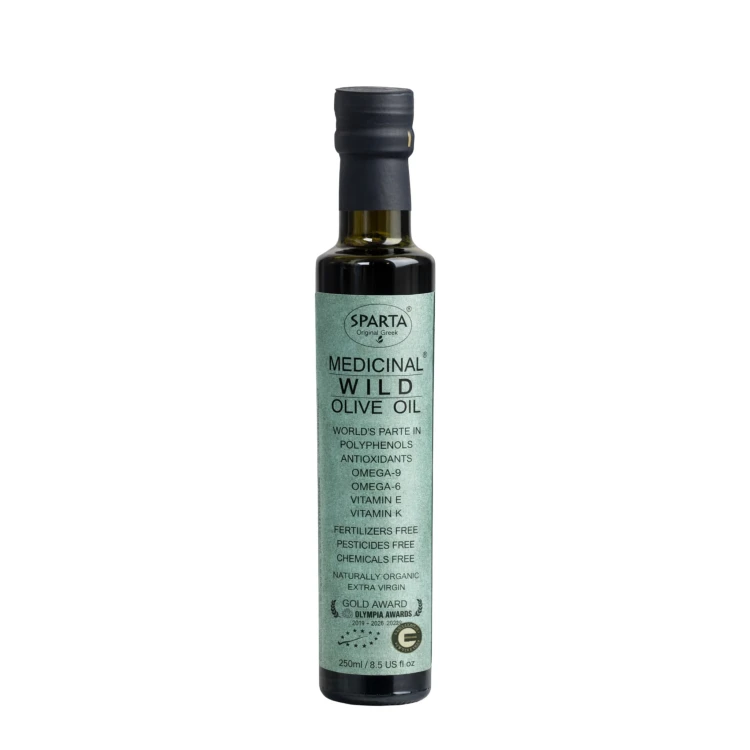














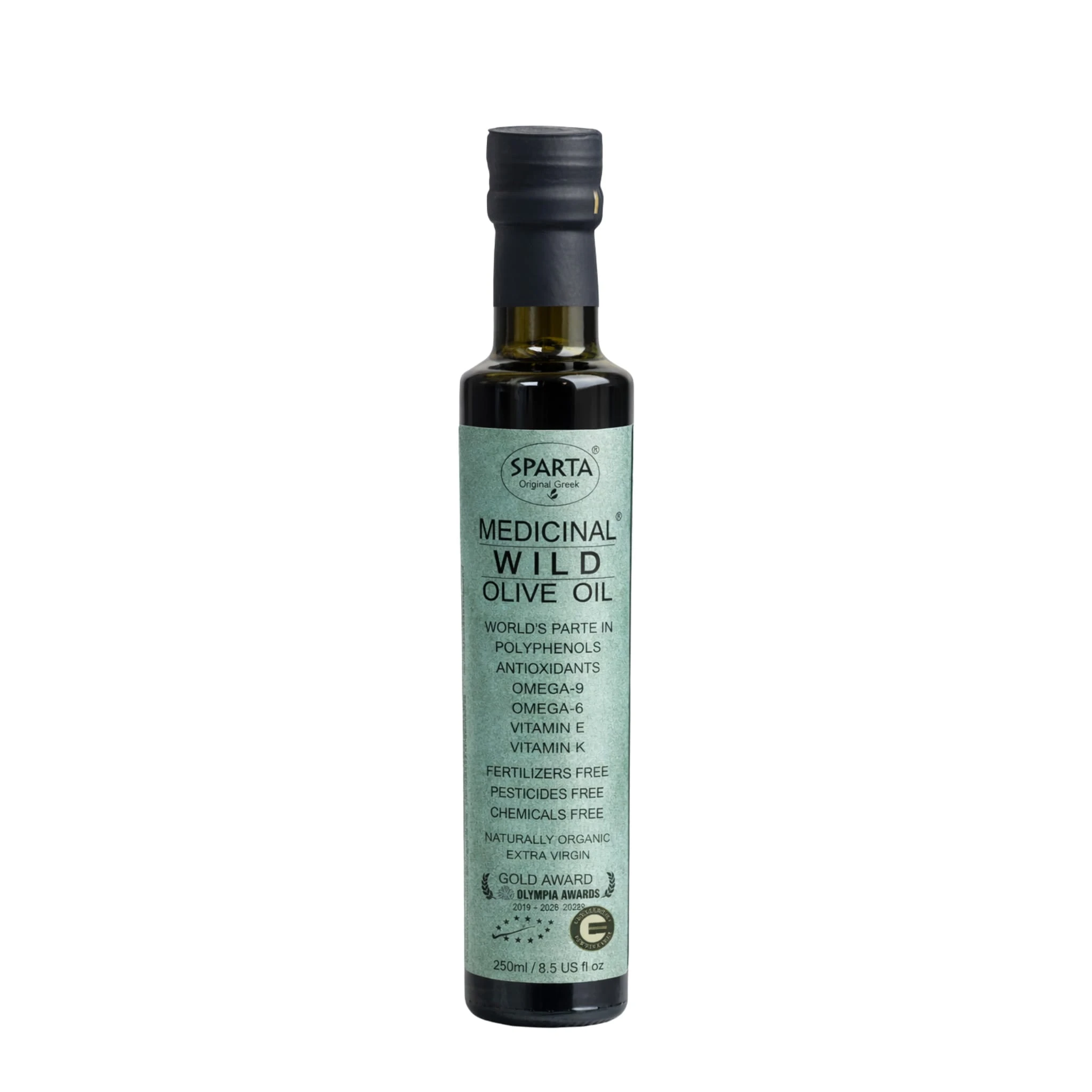
Sparta Medicinal ‘Green Label’ organic extra virgin olive oil made from wild olives, 250 ml (polyphenols: NMR 3432 mg/kg, D1 2649 mg/kg)
Leave feedback on the product



Availability: temporarily unavailable
Shipping time: up to 3 business days
EAN: 5214001332458
Manufacturer: Sparta Medicinal
Shipping costs are not included in the price.
Shipping costs are not included in the price.
Wybierz wariant produktu:
Individual variants may differ in price
Share the product card




Ask about the product
Administratorem danych osobowych jest Kreta24 Sp. z o.o.. Przetwarzamy je w celu przesłania odpowiedzi na zapytanie. Więcej informacji dotyczących przetwarzania danych osobowych znajduje się w polityce prywatności.
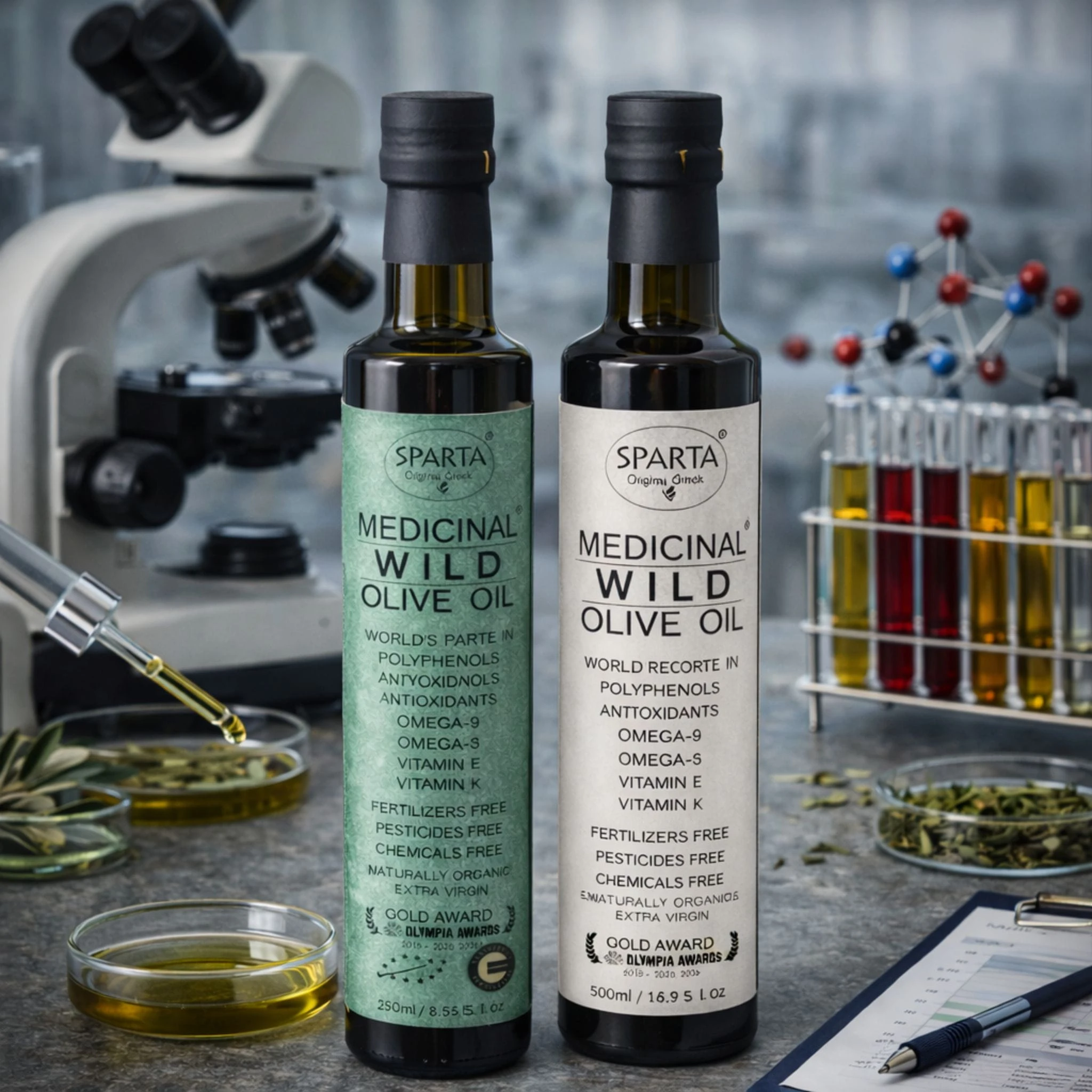
Sparta Medicinal “Green Label” – the olive oil with the highest polyphenol content in the world (2026/2027 harvest)
Sparta Medicinal Wild Olive Oil is an olive oil made from wild olives growing in a forest near Sparta. Based on a database of more than 11,000 samples from 15 countries, the Faculty of Pharmacy of the University of Athens has confirmed it as the olive oil with the highest polyphenol content in the world for three consecutive years. Green Label is its strongest edition. Every figure below refers to the 2026/2027 harvest – the oil pressed in September 2026, which is the oil you will receive.
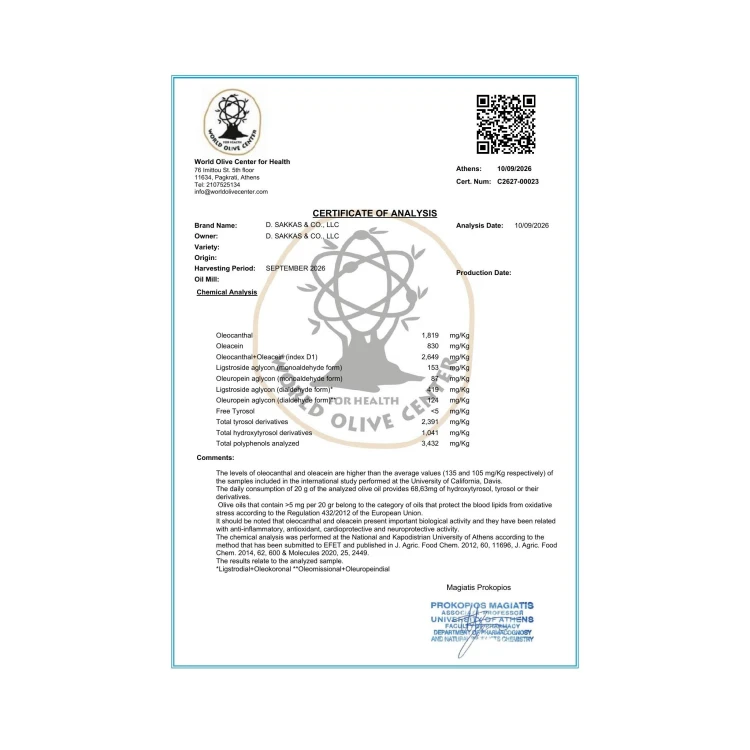
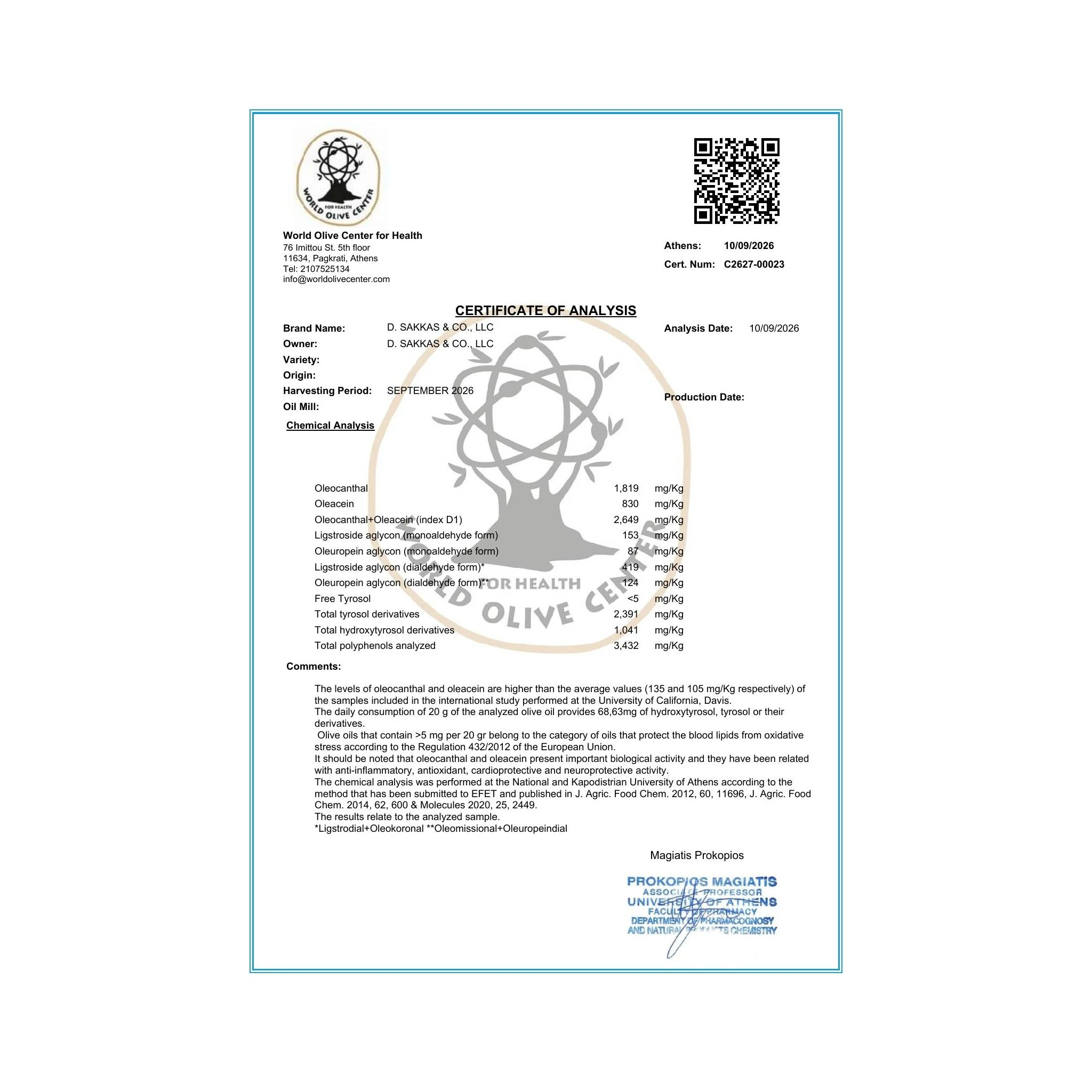
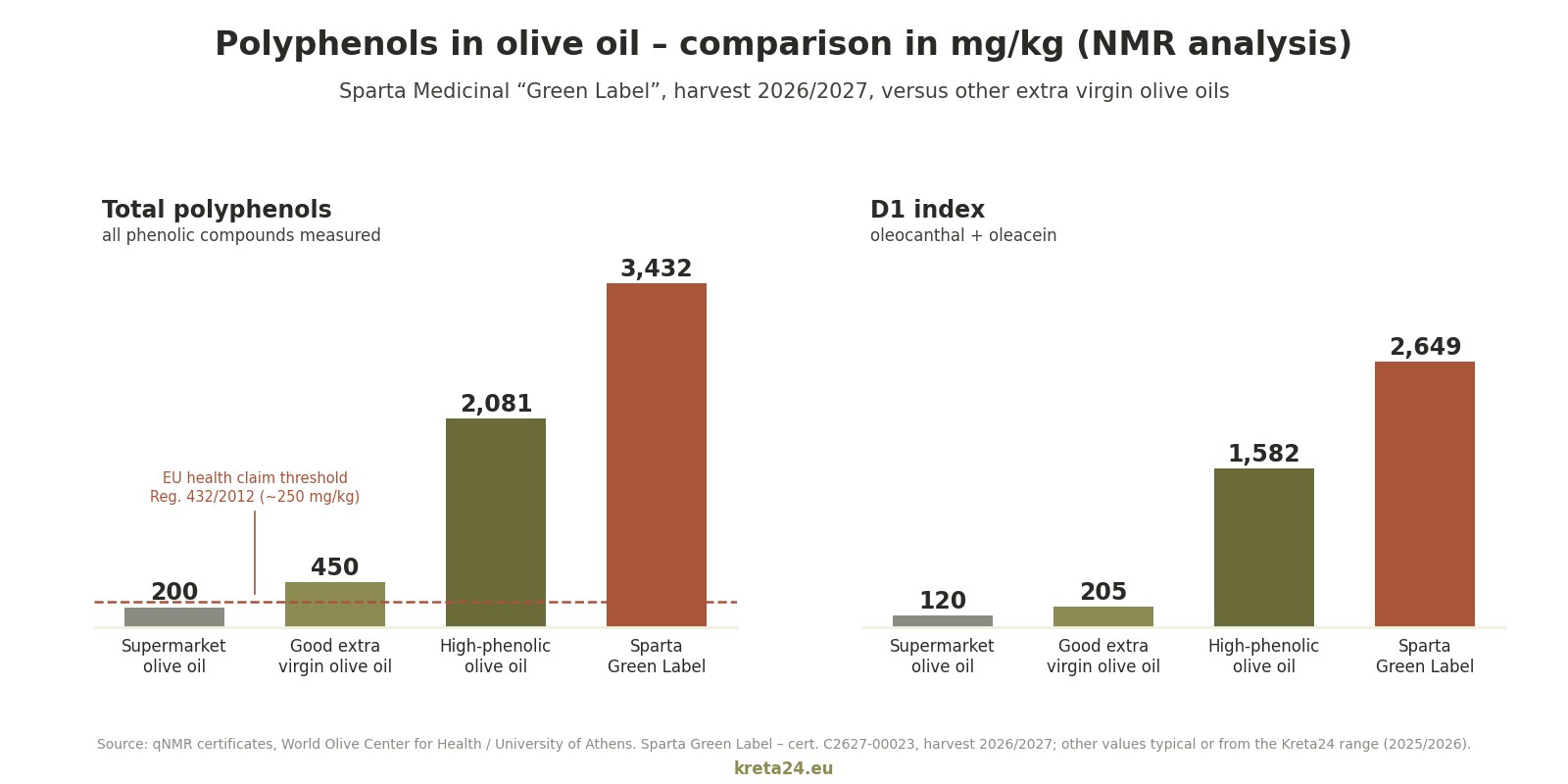
- Polyphenols by NMR: 3,432 mg/kg (World Olive Center for Health, certificate C2627‑00023)
- D1 index (oleocanthal + oleacein): 2,649 mg/kg
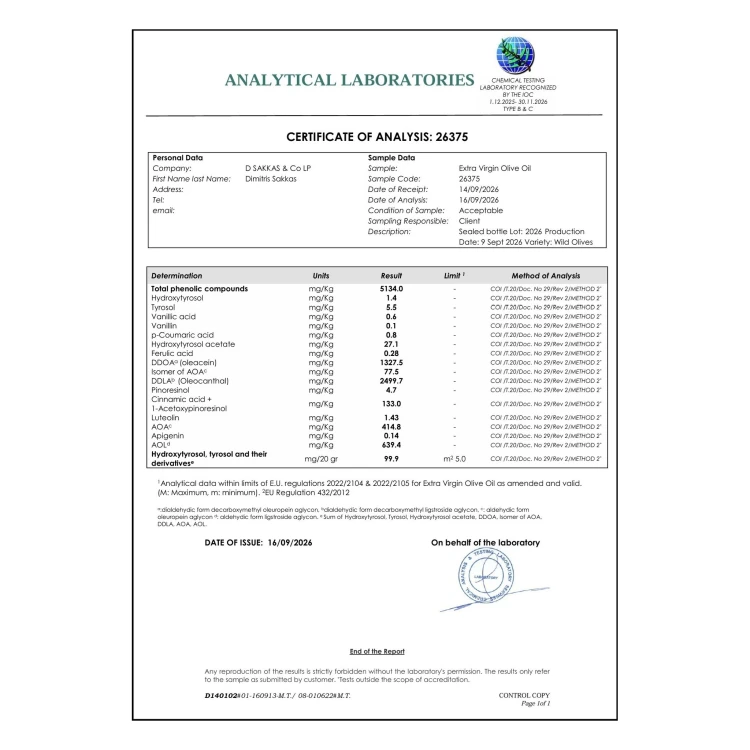
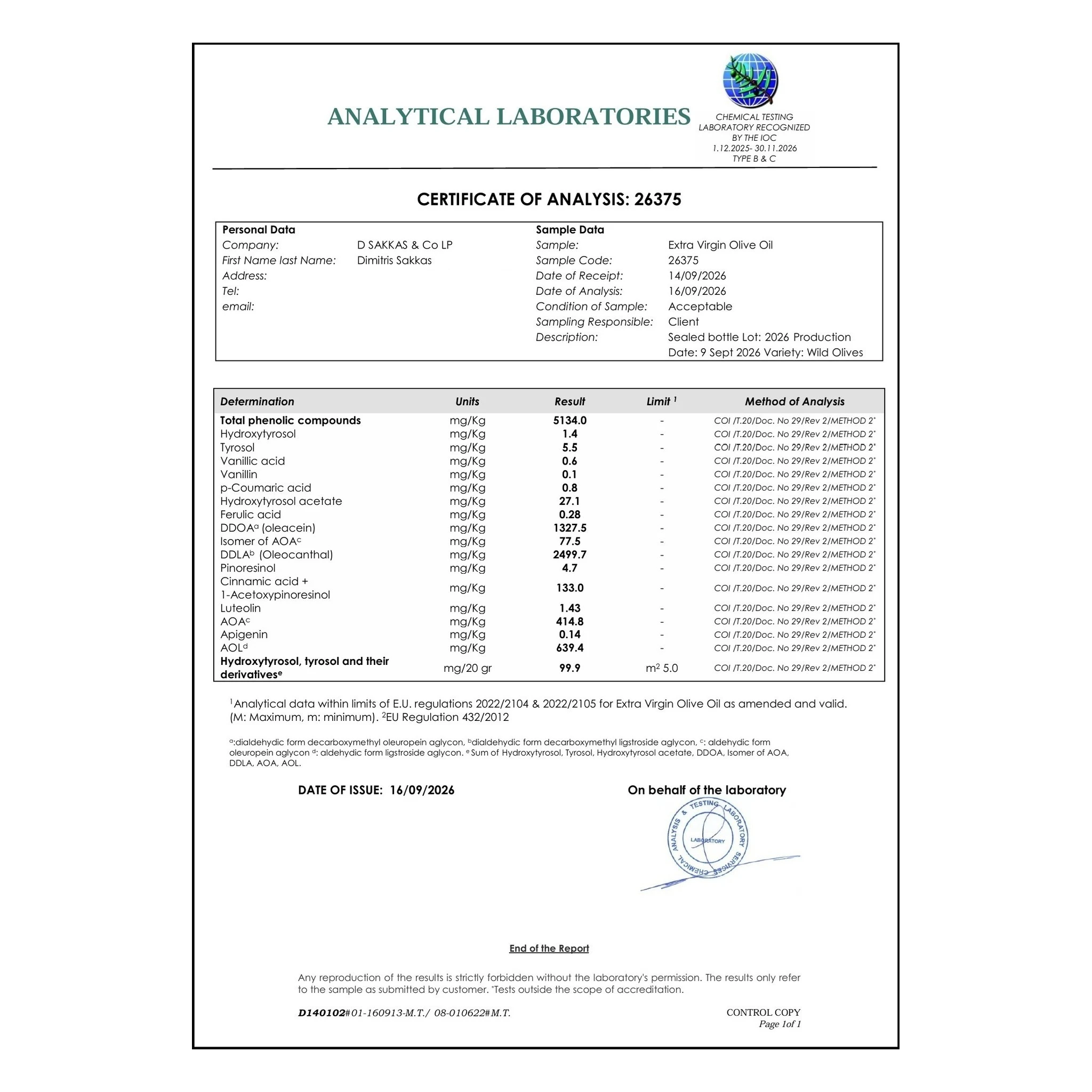
- HPLC, International Olive Council method: 5,134 mg/kg – the result the producer reports as a world record
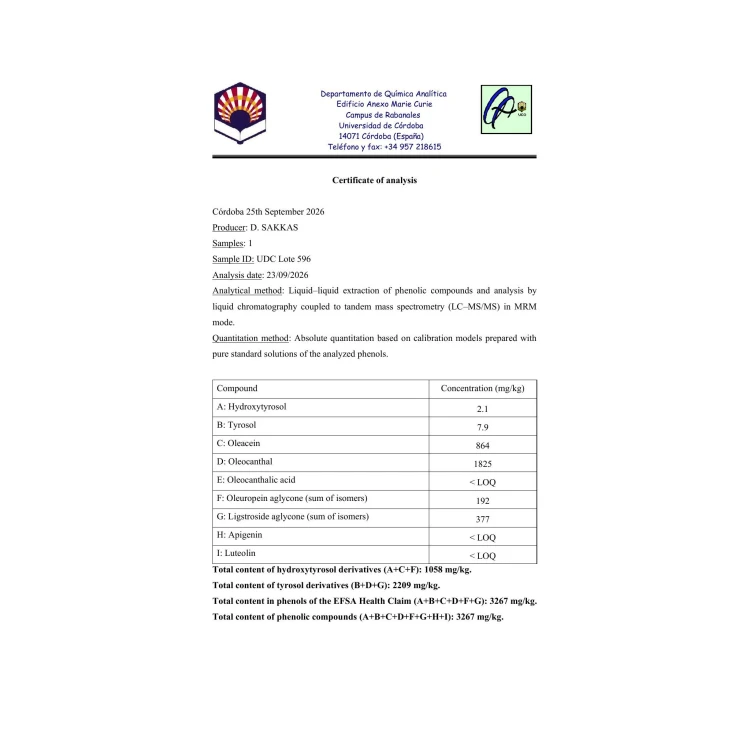
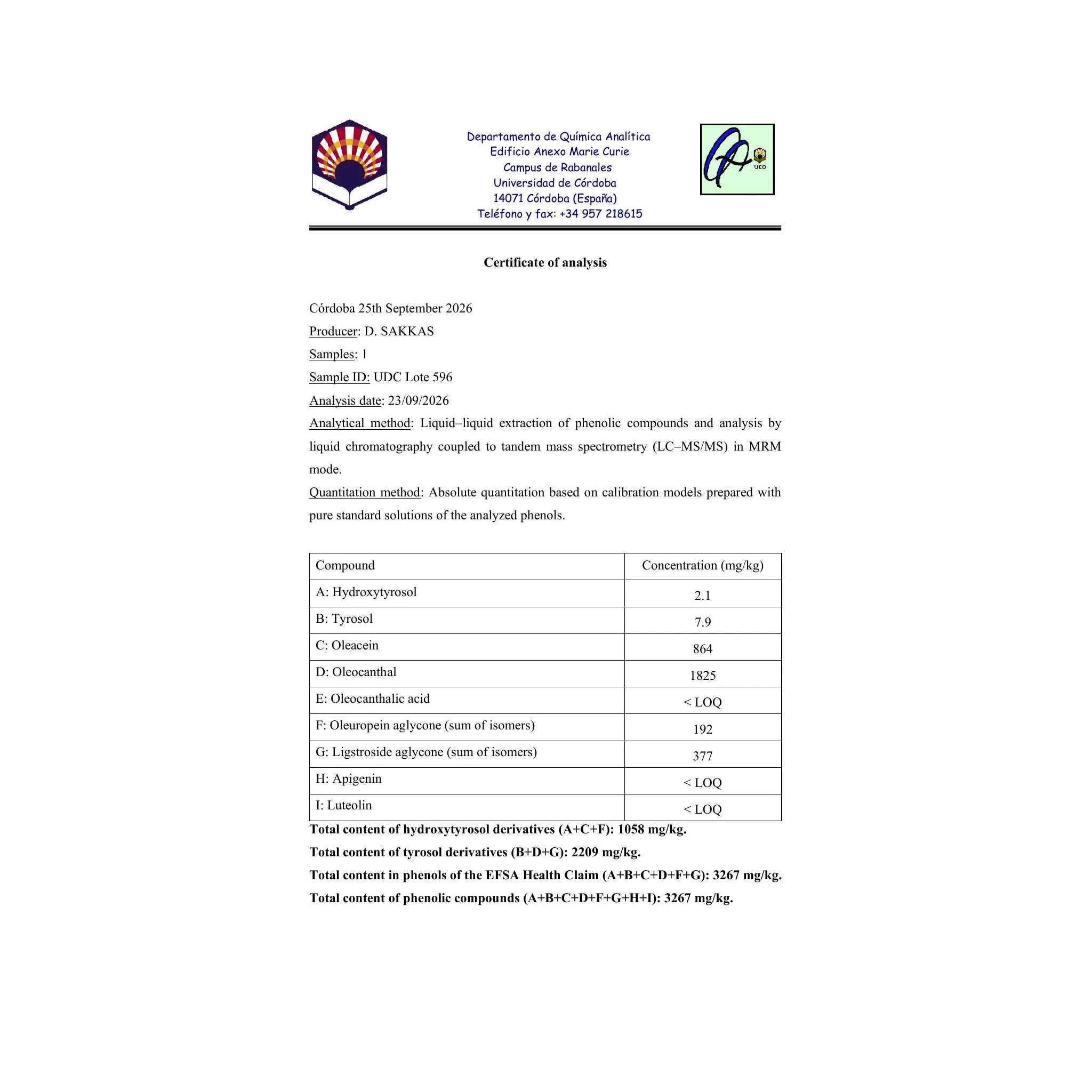
- LC‑MS/MS, University of Córdoba: 3,267 mg/kg – a third, independent confirmation
For comparison: a supermarket olive oil typically contains 100–300 mg/kg, a good Cretan extra virgin 200–500 mg/kg, and oils marketed as “high phenolic” 1,000–2,000 mg/kg. Sparta Green Label has more polyphenols than any other olive oil we have ever tested.
Season, not vintage – why we write “2026/2027”
In olive oil, what matters is not the year but the month of harvest. September and October mean green, unripe fruit: the highest polyphenols, the most bitter and pungent taste, the lowest yield per tree. With every month of delay, polyphenols drop by tens of percent – by December, the same trees give a completely different, mild oil. Sparta Green Label 2026/2027 was pressed on 9 September 2026 (date on the HPLC certificate) and analysed between 10 and 23 September, i.e. within the first two weeks after pressing. A fresh analysis from the same season is the best guarantee that the numbers on the certificate describe the oil in the bottle, not a result from two years ago.
Why it costs what it costs
- Wild trees, not a grove. The olives grow on around 40 hectares of wild olive forest on the slopes of Lykovouni (Laconia, Peloponnese), among wild oregano, lavender and thyme. Nobody irrigates, fertilises or sprays them – they grow like a forest. Wild olives are small and yield several times less oil per kilogram than cultivated varieties.
- Very early harvest. Hand-picked in September, while the fruit is still green and hard – less oil, more polyphenols. Pressing, bottling and storage are done cold, on site, within hours of picking. Glass and stainless steel only.
- Production counted in bottles, not pallets. One small batch per year. It cannot be “topped up” – the next one comes next year.
- Three independent analyses of every batch – NMR (University of Athens / World Olive Center for Health), LC‑MS/MS (University of Córdoba) and HPLC by the IOC method (laboratory recognised by the International Olive Council) – plus tests for pesticides, heavy metals and plasticisers. Their cost is spread over a few hundred bottles.
Concentration, not quantity – one teaspoon instead of six tablespoons
Olive oil is calorie-dense: about 9 kcal per gram. The polyphenol dose, however, depends on concentration, not on how much oil you eat. One teaspoon of Sparta Green Label (about 4.6 g, about 41 kcal) provides around 16 mg of polyphenols. To get the same amount from a supermarket oil (about 200 mg/kg) you would need around 80 g – almost six tablespoons and about 700 kcal. The same polyphenol dose, seventeen times fewer calories. That is why Sparta is a teaspoon oil, not a salad oil – and why 250 ml lasts about 50 days.
Oleocanthal and the D1 index – why these numbers matter
The sharp, throat-catching finish of a good olive oil comes mainly from oleocanthal. The compound was described in 2005 in Nature – researchers noticed that it stings the throat exactly like ibuprofen and acts on the same enzymes. It has since become one of the most intensively studied components of olive oil, with several hundred scientific publications; a few of the newest from 2025 and 2026 are listed at the end of this description. The D1 index is the sum of oleocanthal and oleacein, the two most active olive-oil polyphenols, measured directly by the NMR method developed by Prof. Prokopios Magiatis and his team at the University of Athens. An average extra virgin olive oil has a D1 of around 120 mg/kg; Sparta Green Label has 2,649 mg/kg – more than twenty times as much. We make no promises about effects; we give numbers, methods and sources, and leave the conclusions to you. More on reading NMR certificates in the Polyphenols section of our blog.
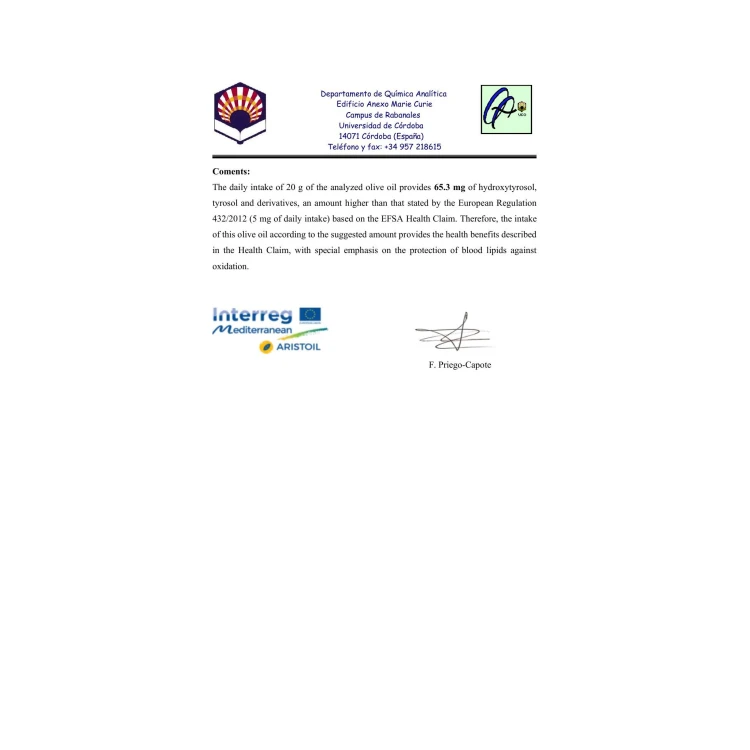
The only health claim authorised in the EU for olive oil (Regulation 432/2012) reads: olive oil polyphenols contribute to the protection of blood lipids from oxidative stress. The condition: at least 5 mg of hydroxytyrosol and its derivatives per 20 g of oil. Sparta Green Label provides 68.6 mg per 20 g – almost 14 times more. A single teaspoon already exceeds the threshold. Polyphenols decline over time even in a sealed bottle, so such a large margin means the oil meets the claim throughout its shelf life, not only on the day of analysis.
How to read the attached analyses (photo gallery and PDF file)
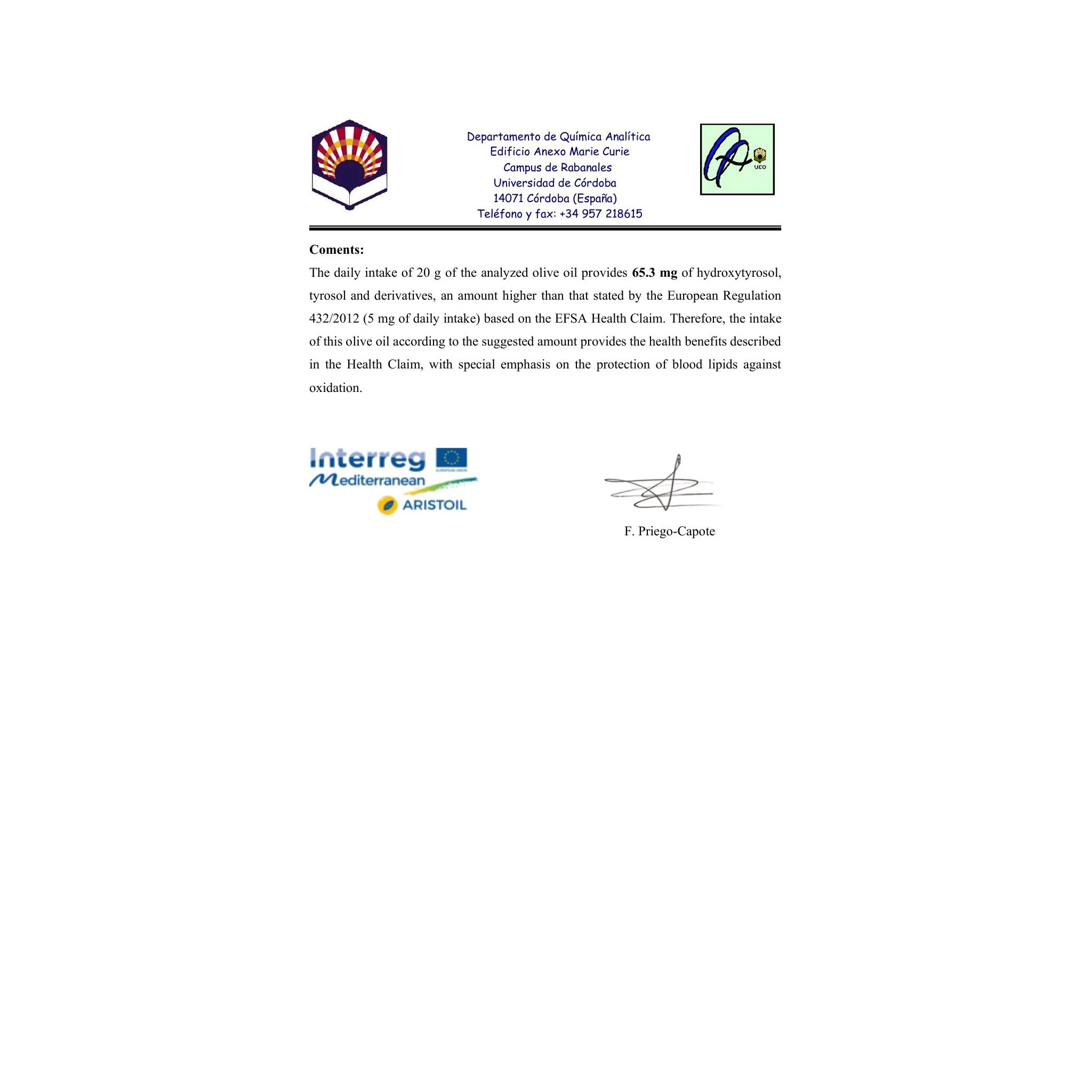
1. NMR certificate – World Olive Center for Health, no. C2627‑00023. The key lines: Oleocanthal (1,819 mg/kg), Oleacein (830 mg/kg) and their sum, the D1 index (2,649 mg/kg). Below them, the ligstroside and oleuropein aglycons – “older” forms of the same compounds. Total polyphenols analyzed (3,432 mg/kg) is the sum of everything NMR measured. In the comments: 20 g of oil provides 68.63 mg of hydroxytyrosol and derivatives against a threshold of 5 mg. The sentence about “average values of 135 and 105 mg/kg” is a reference point from a University of California, Davis study – Sparta exceeds it more than tenfold. Signed by Prof. Prokopios Magiatis. The certificate number can be verified with the World Olive Center.
2. LC‑MS/MS certificate – University of Córdoba, sample UDC 596. An independent method from another country. Compounds are lettered A–I: C is oleacein (864 mg/kg), D is oleocanthal (1,825 mg/kg). Total content in phenols of the EFSA Health Claim (3,267 mg/kg) is the sum calculated exactly as Regulation 432/2012 requires. Oleocanthal 1,825 vs 1,819 mg/kg by NMR – two laboratories, two methods, the same result.
3. HPLC certificate – laboratory recognised by the International Olive Council, no. 26375. The official IOC method (COI/T.20/Doc. 29). Total phenolic compounds: 5,134 mg/kg. Oleocanthal appears here under the abbreviation DDLA (2,499.7 mg/kg), oleacein as DDOA (1,327.5 mg/kg). The last line: 99.9 mg of hydroxytyrosol and derivatives per 20 g against a limit of 5.0 mg. In the sample description: Variety: Wild Olives, production date 9 September 2026.
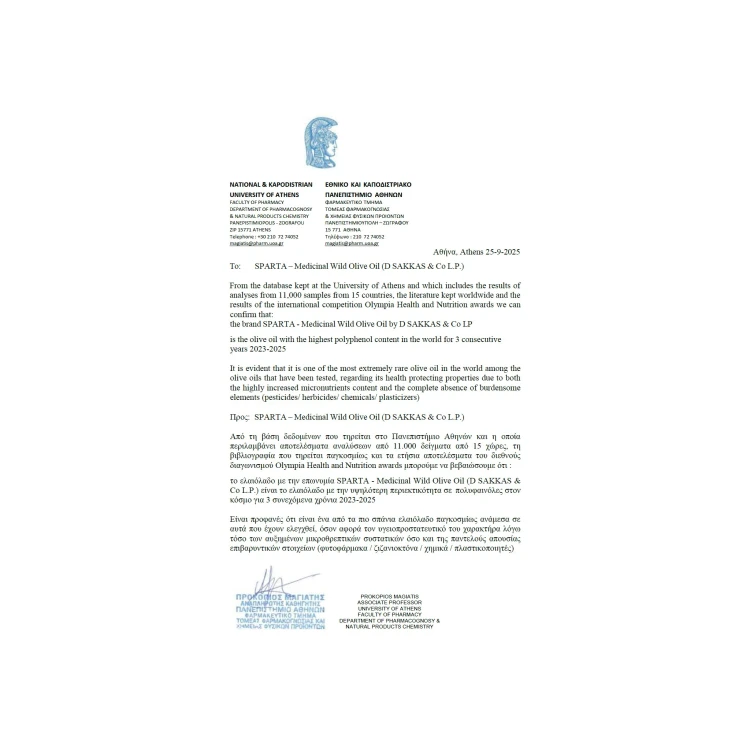
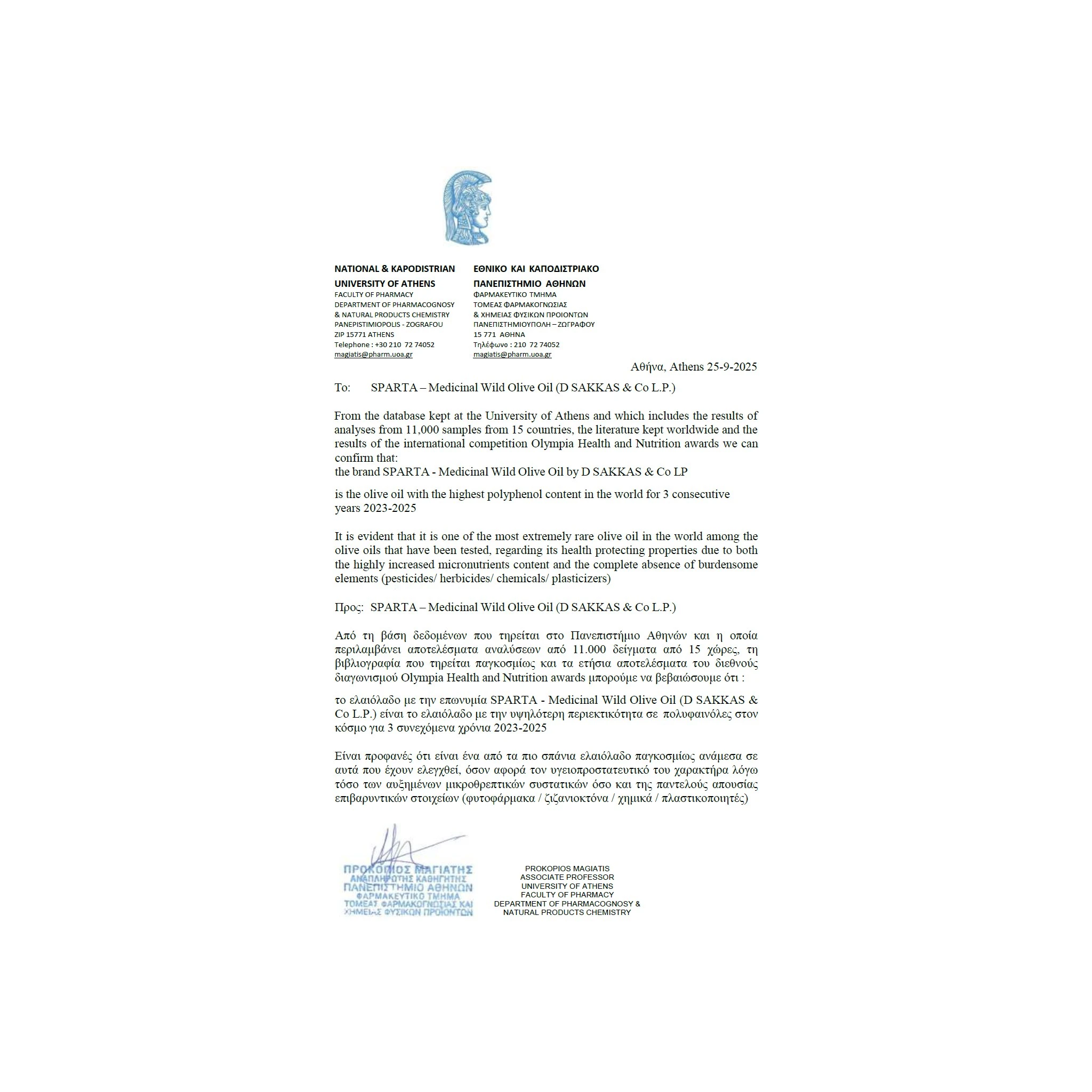
4. Letter from the University of Athens. Confirmation that the brand Sparta Medicinal Wild Olive Oil had the highest polyphenol content in the world in 2023–2025 and that no pesticides, herbicides, chemicals or plasticisers were detected.
Why do the three totals differ? NMR, LC‑MS and HPLC measure different sets of compounds and extract them from the oil differently; HPLC usually gives higher figures. For comparisons in our shop we always use NMR – the same method for every polyphenol-tested oil – so the figures in the product name can be compared directly with other oils in the category. Oleocanthal and oleacein come out in the same order of magnitude in all three methods – the best proof that the result is no accident.
Taste and how to use it
Very dark green, very bitter, very pungent – this is what an oil with this polyphenol content tastes like, and it cannot taste any other way; a “mild high-phenolic olive oil” is a contradiction in terms. The producer suggests 5 ml a day; a 250 ml bottle is about 50 servings. A few drops on a finished dish will change its flavour completely. Coughing after swallowing is a normal reaction to this concentration of oleocanthal.
Storage and shipping
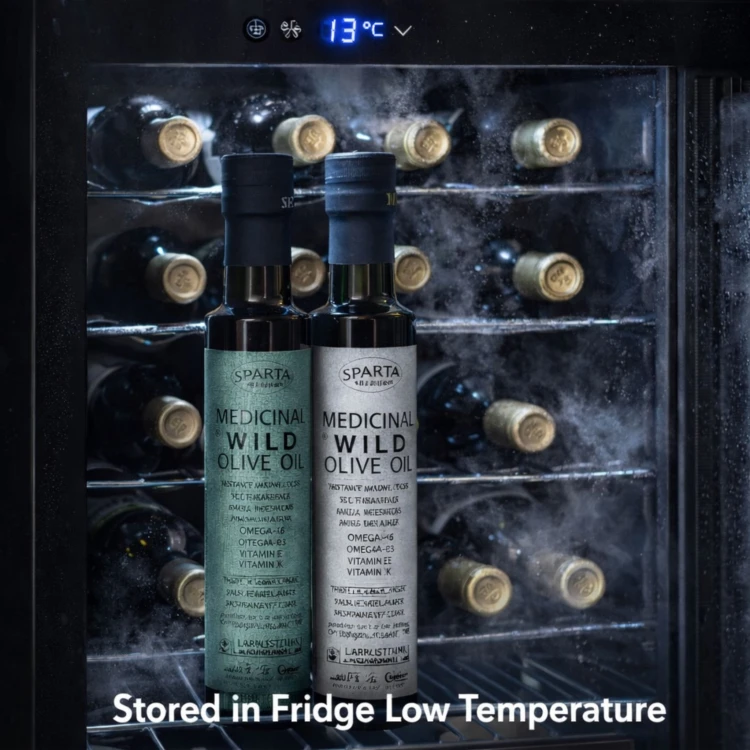
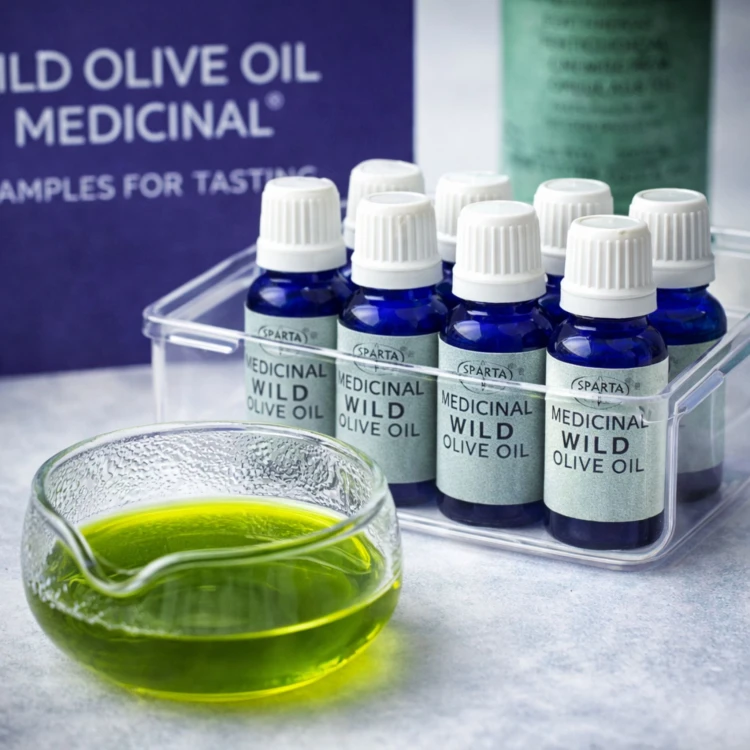
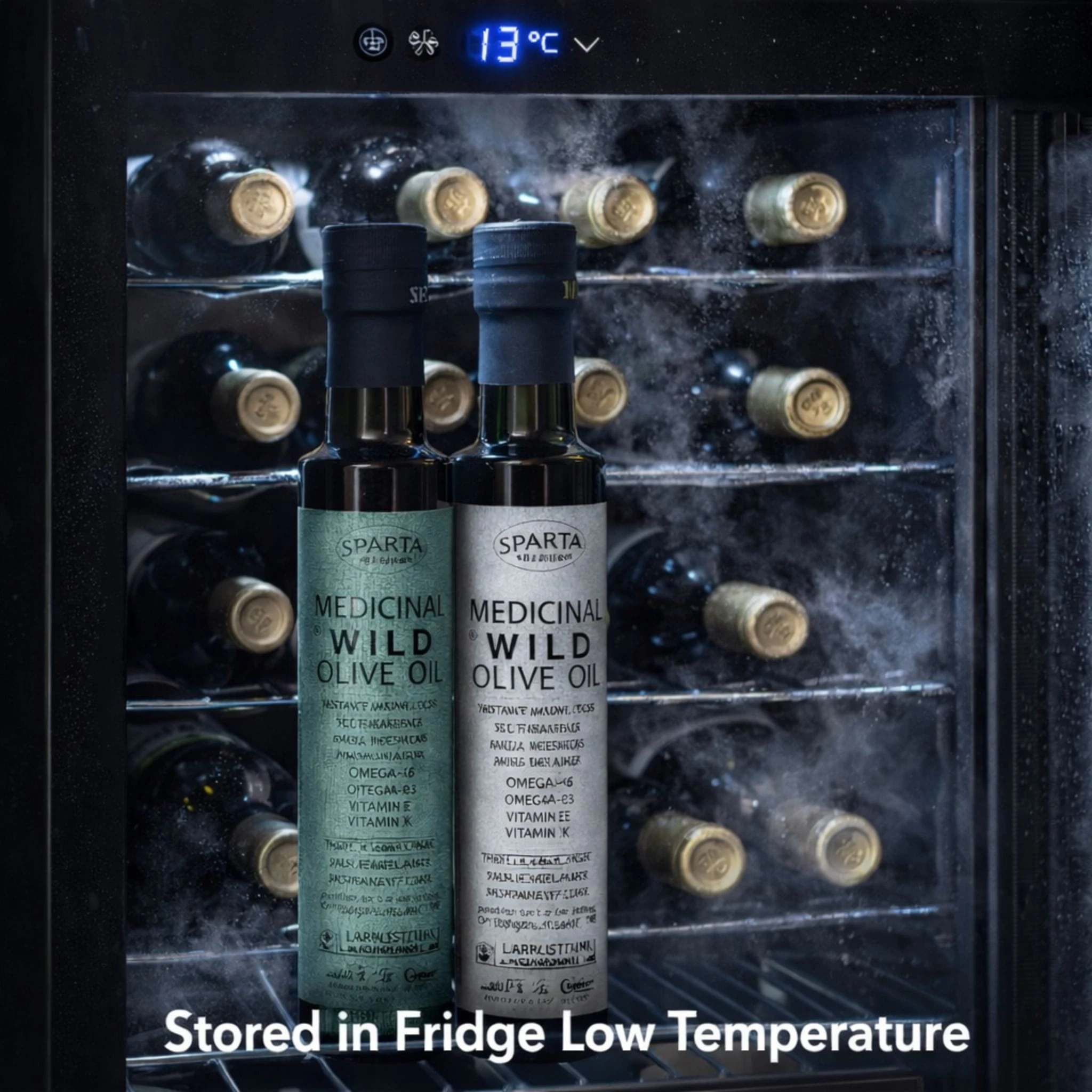
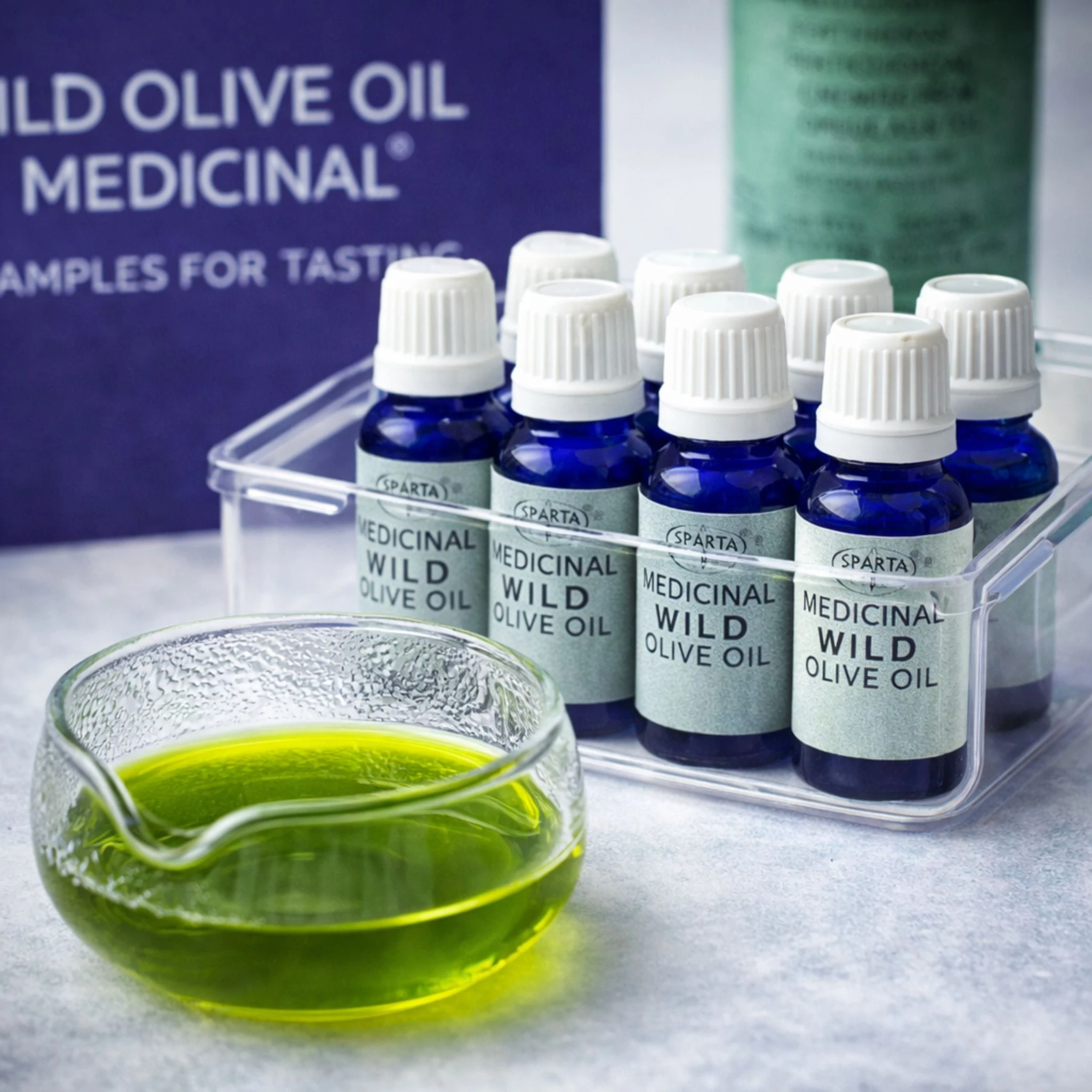
Polyphenols are sensitive to temperature, light and oxygen, so we keep this oil in a refrigerator at a controlled 13 °C (55 °F) and ship it in thermal packaging with a cooling pack. After chilling, the oil may turn cloudy or form a sediment – these are natural waxes that disappear at room temperature. At home: tightly closed, in a dark place, below 21 °C (70 °F); use within a few weeks of opening. Sample sizes of 10, 30, 50 and 100 ml are prepared at low temperature – please add one gel cooling pack to your order.
Analytical results – 2026/2027 harvest
| Method | Total polyphenols | Oleocanthal | Oleacein | Date of analysis |
|---|---|---|---|---|
| NMR (WOCH / University of Athens, C2627‑00023) | 3,432 mg/kg | 1,819 mg/kg | 830 mg/kg | 10 Sep 2026 |
| LC‑MS/MS (University of Córdoba, UDC 596) | 3,267 mg/kg | 1,825 mg/kg | 864 mg/kg | 23 Sep 2026 |
| HPLC, IOC method (cert. 26375) | 5,134 mg/kg | 2,500 mg/kg | 1,328 mg/kg | 16 Sep 2026 |
D1 index (NMR): 2,649 mg/kg. Tyrosol derivatives: 2,391 mg/kg; hydroxytyrosol derivatives: 1,041 mg/kg. Acidity: 0.24% (producer’s data). Variety: wild olives. Pressing date: 9 September 2026. Volume: 250 ml, glass. The full set of certificates in a single PDF is available in the “Files” section.
Producer
D. Sakkas & Co, Sparta, Laconia. The olive forest is protected as natural and archaeological heritage. Naturally organic production status confirmed by TÜV Nord. Producer’s website.
Recent research on oleocanthal and oleacein (2025–2026)
Below are peer-reviewed publications from the last two years, plus two earlier studies the new work builds on. We note what each study looked at – cells, animals or humans – because these are very different levels of evidence. Olive oil is a food, not a medicine; this information is educational.
- OleoMetS (2026, humans, randomised placebo-controlled trial) – 102 people with metabolic syndrome took 10 mg a day of an olive oil extract (80% oleocanthal and oleacein) or placebo for 12 weeks. Samoutis G. et al., Clinical Nutrition ESPEN 2026;71:102883. doi.org/10.1016/j.clnesp.2025.102883
- APRIL (2023, humans, randomised crossover trial) – 91 people with obesity and prediabetes used an oleocanthal- and oleacein-rich olive oil instead of a common one for one month; inflammatory and oxidative-stress markers were measured. Ruiz‑García I. et al., Clinical Nutrition 2023. sciencedirect.com
- MeDi‑SUPOL (ongoing, humans) – a trial by the Aristotle University of Thessaloniki combining the Mediterranean diet with oleocanthal in people with mild cognitive impairment; recruiting since 2025, completion planned for 2029. ClinicalTrials.gov NCT06705738. clinicaltrials.gov
- Oleocanthal and colorectal cancer (2026, mice) – oral oleocanthal given to mice with implanted KRAS-mutant colorectal tumours; the authors also examined the role of gut microbiota by transplanting it from oleocanthal-treated animals. Tarun M.T.I. et al., Nutrients 2026;18(16):2623. doi.org/10.3390/nu18162623
- Oleocanthal and breast cancer cells (2026, cell cultures) – the effect of oleocanthal on the metabolism and mitochondria of three breast cancer cell lines; the response depended on the tumour subtype. Quetglas‑Llobera S. et al., Antioxidants 2026;15(4):410. PubMed
- High-oleocanthal and oleacein olive oil in patients with chronic lymphocytic leukaemia (2022, humans, pilot) – 40 ml a day of an oleocanthal- and oleacein-rich oil in early-stage patients; haematological and apoptosis markers were measured. Rojas Gil A.P. et al., Frontiers in Oncology 2022. PMC
- The discovery of oleocanthal (2005, mechanism) – the paper where it all began: Beauchamp G.K. et al., “Ibuprofen‑like activity in extra‑virgin olive oil”, Nature 2005;437:45–46. nature.com
More on clinical studies with high-phenolic olive oil, including meta-analyses, in the Polyphenols section of our blog.
Data do synchronizacji z Base EN:
If you've added a review and it doesn't appear on the list, it may be pending moderation.
Leave feedback on the product
Downloads: certificates & documents
 sparta-medicinal-green-label-komplet-badan-polifenole-2026-2027.pdf
1.05 MB
sparta-medicinal-green-label-komplet-badan-polifenole-2026-2027
Zobacz jeszcze
-
Price €1.00
-
Price €1.25
-
Price €0.75
-
Price €1.50